Unit 2
Course Objectives
Explain the purpose for learning about the aging process and about social attitudes toward the aged person.
Identify facts concerning aging and the elderly
Describe stereotypes about aging that are prevalent in our society
Apply an understanding of basic human needs
Identify ways the CNA can assist the resident in meeting basic human needs
Learning about the aging process and about social attitudes toward the aged person enables the aide to provide resident care with understanding and respect.
Studies have shown that residents in LTC communities will start losing their ability to do a skill if they do not preform a skill 10 days in a row. It is important that we encourage a resident's independence and perform resident-centered care.
Stereotypes about Aging:
Perception vs reality
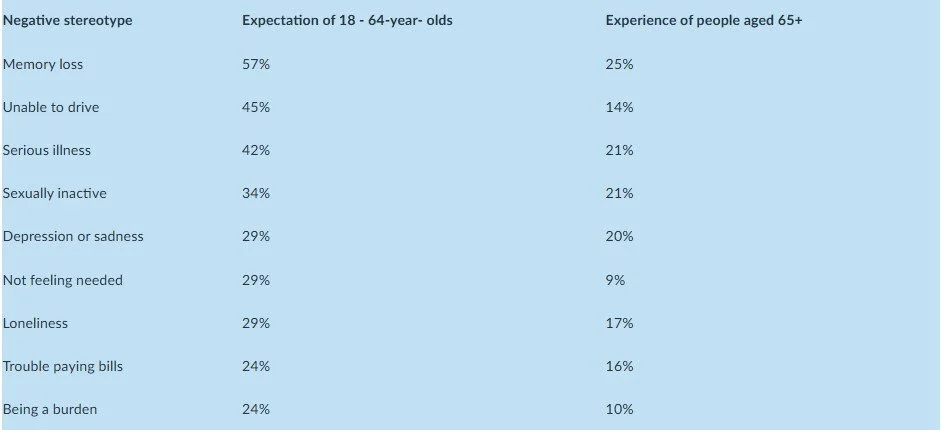
Some age-related stereotypes are positive, such as the kindly grandparent or wise matriarch. However, in Western culture especially, most of these stereotypes are negative. Getting older will undoubtedly result in physiological and social changes, but - as research published in The Wall Street Journal (WSJ) indicates - many of these changes are significantly overplayed:
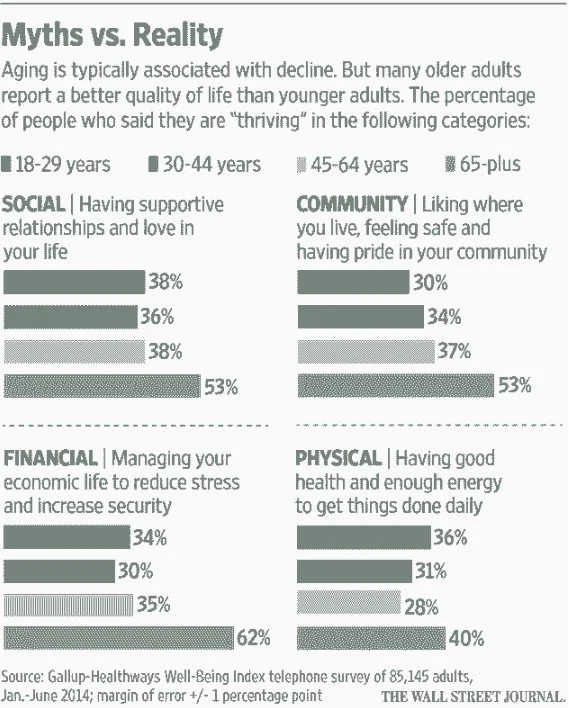
Not only are these stereotypes significantly over-emphasized, there are many areas in which older people actually have a better quality of life than their younger counterparts:
People tend to feel younger as they get older. 61% of 65 - 74-year-olds feel younger than they are, as well as 57% of people aged 75+.
Mood, relationships, well-being, knowledge and certain forms of intelligence can also be enhanced by age.
This research demonstrates how negative stereotypes about ageing aren't only held by young people, but also people in middle and later life.
Why it is important to overcome negative stereotypes about aging
According to numerous studies in geriatrics (branch of medicine dealing with the health and care of the eldery), perceiving aging in terms of just disability or decline leads to poorer physical health outcomes. Becca Levy, associate professor at Yale School of Public Health, quoted in the Wall Street Journal article above, went as far as describing negative stereotypes about aging as "a public health issue".
Regardless of medical history, education level, or socioeconomic status, people with negative perceptions of aging have been found to have:
Higher rates of cardiac disease.
A median life expectancy that's 7.5 years shorter.
Less chance of recovering from severe disability.
Poorer memory and cognition.
Lower quality diet and exercise regimes.
Less inclination to take medication as instructed.
Shakier handwriting.
Having identified these effects, psychologists, neuroscientists, and cognitive therapists have begun identifying strategies to overcome these negative stereotypes and improve the overall health of older people.
Education for all is key to removing these stereotypes. Techniques including those used to treat depression, combat race/gender bias, and remove addictive behaviors have all proved effective at nullifying these stereotypes. Educational treatment even works when used subliminally.
Not only does this alleviate many of the negative health-related factors outlined above, studies have also indicated long-term improvements in self-image, strength, and balance.
Negative stereotypes about aging have been shown to be inaccurate, and damaging from both a physical and cognitive perspective. Aging is a natural experience that we all face; by changing the way we think and feel about this experience, we can all live healthier, happier lives.
Not everyone in LTC Communities are over 65.
It is important to understand , not only elderly are in LTC communities. A 22-year-old who took a ‘bath salt’ at a party and suffered severe brain damage, a 38-year-old quadriplegic from hitting his head while diving off a boat, a 42-year-old young mother with a progressive debilitating disease, a 32-year-old woman who had a stroke, and many more are all examples of younger people in our local LTC communities. Can you imagine being in an LTC community? Take a moment and consider how these residents might need care that is focused on their needs and how it might be the same and how it might be different.