Unit 19
When the digestive system does not function properly, parenteral nutrition (PN) (sometimes referred to as total parenteral nutrition) may be needed. With parenteral nutrition, a solution of nutrients goes directly into the bloodstream. It bypasses the digestive system. CNA's are not responsible for parenteral nutrition. They may be assigned to measure the resident's temperature or assemble supplies. In addition, duties include observing, reporting, and documenting any changes in the resident or problems with the feeding, or issues with the IV site.
Alternative Fluid Intake
IV (intravenous), is a fairly common treatment for adults and seniors who require nutrition or medication delivered directly into the bloodstream. The fluid, nutrients, and/or medications are administered through access to a vein. The device inserted into a vein is usually a short plastic tube. Fluid is administered by gravity drip or infusion pump.
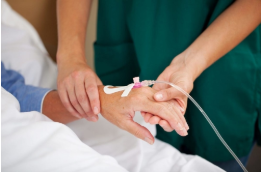
CNA's responsibilities:
Understand nutrition and hydration goals that are part of the care plan.
Protect tubing from kinks and pressure. Protect tubing while resident changes clothing, turns in bed, or ambulates.
Keep infusion site dry while resident bathes.
Do not disconnect tubing or reconnect if accidentally disconnected. Notify nurse.
Take blood pressure on arm that does not have an IV infusion.
Resident who is not taking oral fluids but is receiving IV fluid continues to need mouth care.
Notify nurse promptly of any potential problem:
If drip administration, observe for continuing drips in tubing chamber.
If pump administration, alarm will display and sound if flow is blocked. Observe that pump is operating.
Observe tubing. Report blood backflow to nurse.
Observe infusion site for redness, swelling, or discomfort.
Feeding Tubes
When a person is unable to swallow, he may be fed through a tube. A nasogastric tube is inserted into the nose and goes to the stomach. A tube can also be placed into the stomach through the abdominal wall. This is called a percutaneous endoscopic gastrostomy (PEG) tube. The surgically-created opening into the stomach that allows the insertion of the tube is called a gastrostomy. Tube feedings are used when residents cannot swallow but can digest food. Conditions that may prevent swallowing include- coma, cancer, stroke, refusal to eat, and extreme weakness. It is important to remember that residents have the legal right to refuse treatment. This includes the insertion of tubes.
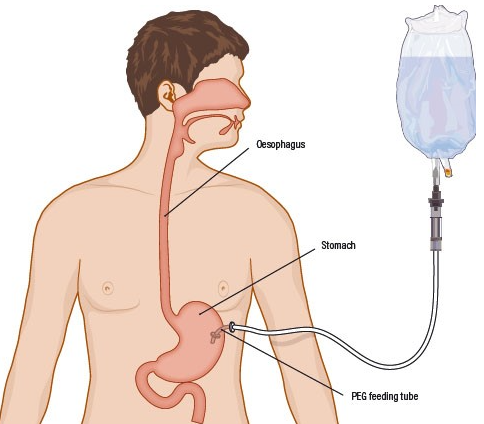
G-Tube (gastrostomy) and PEG tube (percutaneous endoscopic gastrostomy) are feeding
tubes inserted through a surgical opening in the abdominal wall into stomach. For long-term
use.
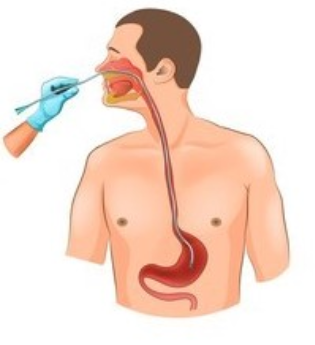
NG (nasogastric) tube is placed by the nurse through the resident’s nostril to the stomach. For
short-term use. Tube may also be used with other disorders to suction or remove stomach
contents.
CNA's Responsibilities:
Understanding that administering tube feedings is the responsibility of the nurse.
Understand nutrition and hydration goals that are part of the care plan.
Assist resident to elevate head by 30° to 45° (Fowler’s position) during tube feedings and for 30 to 60 minutes following. Position helps to prevent aspiration of tube feeding liquid.
Position tubing with no tension on the insertion site.
Protect tubing from kinks and pressure. Protect tubing while resident changes clothing, turns
in bed, or ambulates.Provide skin care to intact skin around tube insertion site.
Resident who receives tube feedings continues to need mouth care.
Notify nurse promptly of any potential problem:
Observe for signs of aspiration, such as coughing or choking.
During feeding administration, observe that pump is operating, or fluid is flowing.
Be alert for gastrointestinal symptoms such as nausea, vomiting, diarrhea, or constipation.
Observe for redness, drainage, or pain at tube insertion site. Resident’s manipulation of tube
may be an indication of discomfort.Pulling at the tube may dislodge or disconnect it.