Unit 10
Common nutrition and hydration issues
According to the CDC, poor food choices and poor diet directly relate to at least 4 of the the 10 leading causes of death in the US. These are heart disease, cancer, stroke and diabetes as well as other health issues. Assisting the resident to eat a healthy diet while supporting resident rights and choices is important in keeping the resident healthy.
Factors that affect the resident's nutrition and hydration status are:
Decreased activity lessens appetite.
Hand and arm control or strength may be weakened from neurological conditions.
Vision changes cause difficulty seeing clearly what is on the plate.
Medications can affect the taste of food as well as appetite.
Residents may tire easily due to chronic disease.
Depression can reduce interest in food and eating.
Dementia can actually cause the resident to forget the steps used in eating.
Lack of consideration from staff in preparing food the resident likes and is accustomed to will decrease the will to eat.
C.N.As role in supporting nutrition and hydration
Respect the resident's rights in choosing foods while encouraging a healthy diet.
Encourage the resident to be as independent as possible and then assisting with what they cannot do for themselves. Residents can tire before they are full or are done eating, be mindful of this and step in to assist.
Use adaptive utensils, to support success such as the items shown below:
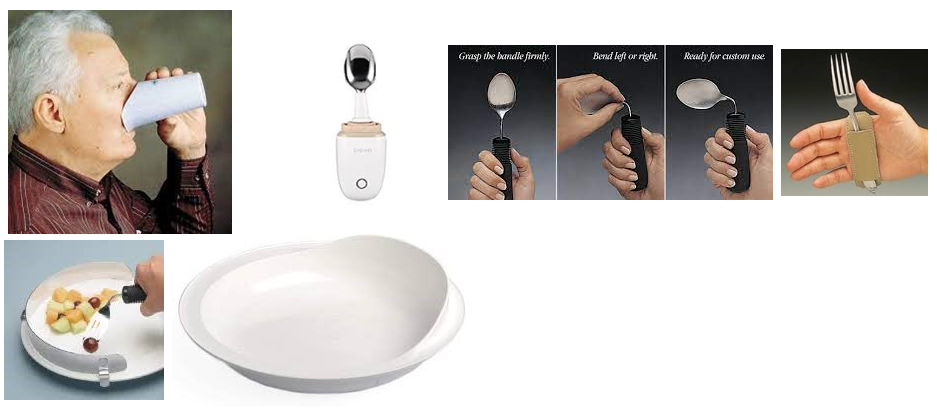
Nosey cup, weighted utensils, articulating utensils, scooper plates and bowls, plate guards, and more can help a resident be independent in dining.
C.N.As role in supporting nutrition and hydration
Preparing the resident for a meal
Residents eat better when dining with others.
Verbally prepare the resident for mealtime by communicating ie " It's almost time for breakfast, I was smelling the fresh cinnamon rolls they are baking this morning, it smells so good, let's get ready to go."
Groom them for the meal, comb and groom their hair, ensure their glasses are clean, hearing aide are in the ear and turned on, dentures are clean and in the mouth. Assist the resident to wash their hands.
In the dining room offer to transfer them from a wheelchair to a dining room chair if needed, ensure the resident is sitting upright and close enough to the table to comfortably reach their food.
If a resident is dining in their bed, assist the resident to sit upright and position the bedside table to be in easy reach of the tray. Ensure the food is covered as it leaves the dining room. Open the sealed small packages. Do not leave until you take a moment to ensure the resident has everything needed to eat.
If a clothing protector is used, please do not call it a bib as that is a demeaning term.
Do not touch the resident's food with your bare hands. Never blow on their food to cool it down, rather offer cold foods first if the hot food is too hot.
When sitting to assist a resident to eat, talk to the resident not to other staff members.
Sit when feeding a resident, do not lord over them.
Do not feed more than one resident at time and wash your hands if you must help a different resident.
Assisting the resident to dine
Ways to assist a resident to dine.
1.) Cueing - If a resident is distracted, cue the resident back to focusing on eating. Be careful not to talk in a demeaning way such as "Gloria come on now focus on eating don't be looking out the window." Rather, say something such as "Gloria, have you tried the potatoes, they look so good I am thinking of ordering them can you try a bite for me?" Supporting the resident's dignity is crucial.
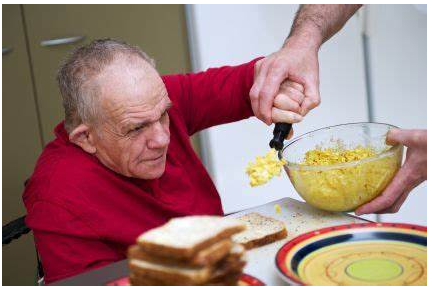
2.) Chaining - A resident with dementia may look as though they are 'playing with their food or are stuck holding the spoon in mid air. This is usually due to a break in the chain of eating. There are actually several steps to eating, scooping up the food, lifting it to the mouth, placing the food in the mouth, chewing and then swallowing, repeat. It is common for a break in the chain. The resident is caught unable to remember the next step. To correct this, take your hand and place it over their hand and guide the spoon or fork to the next step. The resident generally will then take up the task and continue to eat. The resident very well may get stuck again after a bite or two, when this happens simply repeat the hand-over-hand technique.
3.) Mirroring - This technique requires that you mimic or mirror for the resident what you want them to do such as open their mouth, put the spoon in their mouth or swallow. You perform the task in front of them and they will follow your lead.
4.) Hand over hand - To perform the hand over hand technique place the utensil in the resident's hand, then with your hand over their hand guide the utensil through the steps of eating. Some residents will be care planned to eat the entire meal with hand over hand and some residents may just need to have hand over hand assistance when they are tired and can no longer eat independently. Using hand over hand, the resident is still engaged and the connections in the brain are still working to keep as much of the skill of eating as possible.
Full assist in dining
There are times when a resident will need to be fed, a full assist in dining.
1.) Never refer a resident that requires a full assist to dine as a 'feeder' this is a very derogatory term and should never be used.
2.) Always sit, never stand when you are assisting a resident to eat. This is a state regulation. Standing over a person gives the seated person a feeling of subordination.
3.) Give the resident time to process the food in their mouth and swallow. Give sips of fluid ever few bites.
4.) Sit next to the resident or directly across from them. Look at the resident and be engaged while visiting with them even if they are unable to talk to you.
5.) Tell the resident what every bite of food is that you are assisting the resident to eat. This is especially important when the resident is on a puree diet as so many of the foods look alike. Look at the picture below. Can you tell what the foods in the picture are? You might think one of the beige scoops is mashed potatoes but what if you were thinking savory potatoes but it actually is cake? We taste with our minds as well as our mouth. This is why it is important to know what each food is and explain to them with each bite what you will be placing in their mouth.
Assisting a resident living with dysphagia
Dysphagia
Dys - a dysfunction or a difficulty with... Phagia - refers to the throat. When Dysphagia is spelled with a g it refers to swallowing. So dysphagia is difficulty swallowing .
Swallowing seems simple, but it's actually pretty complicated. It takes your brain, several nerves and muscles, two muscular valves, and an open, unconstricted esophagus, or swallowing tube to work just right. Those that have experienced a stroke, degenerative disease or neurological disorder may be living with dysphagia.
The C.N.As role is to assist the resident to eat and drink safely, without choking.
Sometimes a resident living with dysphagia will not clear food or fluids from the throat and the food or fluid goes to the lungs via the trachea (windpipe) instead of the stomach via the esophagus. This is called aspiration. Aspiration can lead to aspiration pneumonia and be very dangerous.
Many times a person living with dysphagia does not have the ability to cough strongly enough to bring the food or fluid back up and it can stay in the lungs and grow bacteria. Signs of aspiration include watery red eyes and nose, especially while dining, or a quiet cough with the tongue slightly out.
Tips to assist a person living with dysphagia to eat and drink safely:
Follow the care plan from the Speech Therapist.
Ensure the resident is sitting upright when eating or drinking with the head slightly forward and down.
Do not use a straw unless it is approved
Small sips are much better than large gulps
While we encourage residents to socialize during the meals, with dysphagia it is important for the resident not to laugh or talk while trying to swallow.
Check the diet to make certain the proper consistency of food ie mechanical soft or puree is given as well as the correct fluid consistency- nectar, honey or pudding. This should be care planned and on their diet card. The thicker the fluid the easier it is for the tongue to corral and hold the fluid so it can be controlled and swallowed without aspiration.
Have patience, a person living with dysphagia will take longer to eat. If this person senses you are in a hurry they may quit eating before they have eaten enough food or had enough fluid intake.
Eating and Drinking; Late Stages of Dementia
NOTE: The video below often depicts staff wearing gloves while feeding residents. If the job is very messy or it requires you to touch the food then, yes, gloves are appropriate. But understand that gloves are not mandatory or even advised when feeding residents as some deem it a dignity issue. Please follow your facilities guidelines in regards to wearing gloves while feeding residents.
Diets
In times past residents were prescribed orders for specific diets that the kitchen would send out without much input from the resident. Now with person centered care, residents are actively involved in the diets and foods that are prepared for them.
Diets that you might see
1.) Low Sodium Diet or no added salt - Usually due to cardiac diagnosis - this diet focuses on less sodium intake (salt)
a. Foods high in salt- processed (prepared meals), pork, chips, savory crackers
2.) Low concentrated sweets - Generally prescribed to those living with diabetes mellites (DM) - this diet refrains from foods that are high in sugars.
a. Foods high in sugar- sweets, candy, pastries; carbohydrates such as grains (flour), rice, and pasta; and starchy vegetables like corn and potatoes
3.) Regular diet - a general diet for most residents based on a 2000 calorie diet 30% from fat and 3000 mg of sodium.
4.) Texture as tolerated. a regular texture diet but can be altered if the resident requests or needs the texture to change.
5.) Mechanical soft - Usually for those with chewing (dental issues) or swallowing (dysphagia) issues. The food is soft , the meats usually ground as in a hamburger or chicken that is pulled and cut into small easy to chew pieces.
6.) Pureed diet - Generally for residents with significant chewing or swallowing difficulty. The foods are blended to a smooth consistency.
7.) Liquid or clear liquid diet - Usually temporary for a resident preparing for a medical procedure. Includes anything liquid at body temperature that you can see through
a. Apple juice, water, broth, grape juice, black coffee, jello
8.) Full liquid diet- Usually a step up from a clear liquid diet. Includes anything liquid at body temperature that you can't see through
a. Orange juice, cream of chicken soup, coffee with cream, ice cream
9.) Calorie controlled either added enhanced calorie diet to treat weight loss, or calorie controlled for lower calories in weight loss.
Hydration
As we age thirst becomes diminished and dehydration happens faster, thus encouraging fluid intake is crucial. Dehydration can lead to serious problems including kidney failure, infections, seizures and more.
Approximately 48 - 64 ounces (1500 - 2000 ml) of fluid is required daily to prevent dehydration
Signs of Dehydration in the Elderly
A dry furrowed tongue and mouth with thick saliva
Cramping in their limbs
Headaches
Fever
Hypotension (low blood pressure) with dizziness
Low urine output – dark or concentrated urine
Dry skin
Constipation
Dark urine with a strong odor
Check the resident’s skin turgor by gently pinching up the skin on the back of their hand lift it up and then let go, if the skin does not return quickly in place it is a sign of dehydration.
Tips to Help Your Elders Stay Hydrated
Hydration in the elderly can be challenging but here are some tips to help.
Always have fluids around the resident.
Every time you enter their room pick up the water glass and offer the resident a drink. Doing this every time even if it is only a couple sips each time will result in around 10 ounces a day.
Alcohol, caffeine, and sugary drinks can speed up dehydration, so encourage other fluids when possible.
Understand that some residents do not want to drink fluids when going out or when going to an activity as they may be concerned about having quick access to a toilet or having an incontinent episode. Communicate with your resident about this concern and take steps to mitigate the issue.
Don't appear put out or impatient when toileting residents. This way they will feel safe staying hydrated and not worry about bothering you for assistance with toileting.
Have beverages they enjoy at every activity and event. When others are snacking and drinking the resident will be more likely to drink as well.
Occasionally a resident will have a physician order for a fluid restriction to manage a serious medical condition. The nurse will divide the total amount of fluids available to the resident over the course of 24 hours. The C.N.A will need to be careful to monitor and measure the fluid intake and output of the resident with this fluid restriction.
Diabetes Video