
Unit 4
What does it mean to be assertive and why is it so important?
Assertive behavior is one of your greatest tools at work and at home. Learning how the way you express yourself impacts others is a fundamental part of being a successful communicator. In fact, being assertive in the way you use your tone of voice, body language and choice of words can transform the way others respond to you - and have a huge impact on the success of your working and personal relationships, too.
But what exactly is assertive behavior? Ultimately, it’s a way of articulating your feelings in a calm and positive way so that they are listened to, respected and appreciated by others.
Saying no, and explaining why, is also a crucial feature of this style of communication and can be one of the most powerful things you do in the workplace. Being assertive in your delivery can help you to establish those all-important work boundaries, stopping you from feeling stressed, undervalued or angry.
Assertiveness and humility make a fine combination. An assertive person doesn’t need to shout “Me, me, me, look what I did!” from the rooftops. Assertive people are remembered because they stand firm, their needs and interests are clear to others, and because they are reliable; they also frequently become a form of role model for others seeking to assert themselves effectively. Take this role to heart but don’t boast, big note yourself or become pushy, no matter how clever, popular, or successful you might be.
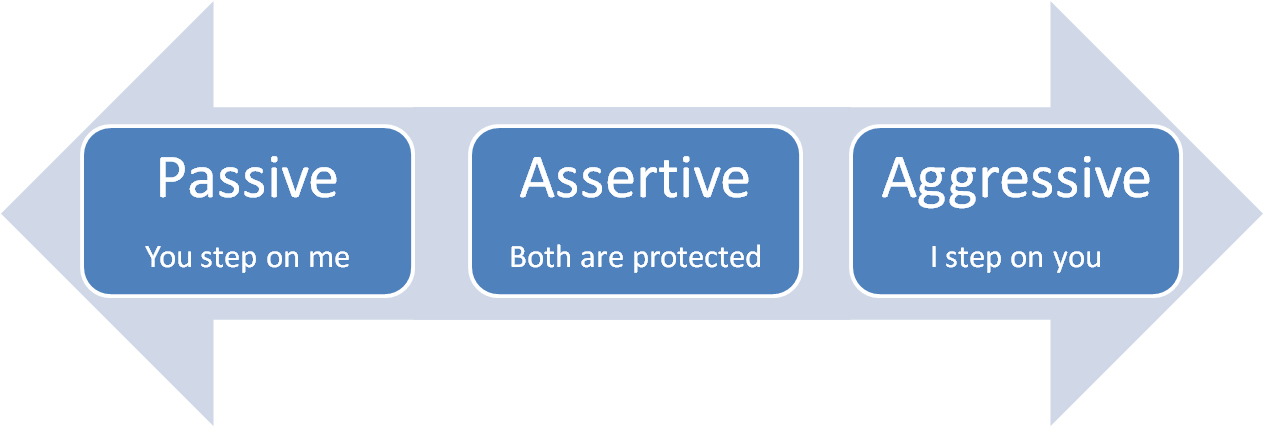
Being assertive falls right in the middle of being passive and being aggressive. If you’re passive, you’ll never get to vocalise your needs; if you’re aggressive, you’ll look like a big bully and will likely be misdirecting your frustrations. However, if you’re assertive, you’ll be able to express your desires while respecting the needs of others, and you’ll have a better chance of getting what you want and deserve.
Here are a few scenarios where you can respond in an assertive manner:
Sample Assertive Responses
Third shift has been leaving dirty briefs in the trash cans and not taking them out of the room, leaving them for first shift. You might discuss this with them the next time you see them, saying something like, "I know you get busy at your last bedcheck, but lately there have been a lot of dirty briefs left in the trashcans. We would appreciate it very much if you could keep a closer eye on this."
DON'T: throw the dirty briefs at your co-worker as they leave
DON'T: write "Third shift is LAZY" on the bathroom stall
DON'T: quietly clean up their mess and make it part of your routine each day
Today was the third day this week that your co-worker, Bertha, was over fifteen minutes late. You could say to her in a calm, even tone, "I would appreciate it if you could do better about being on time. Third shift either has to wait on you to go home or I am left short on the floor and have to rush and you know how the residents don't like that."
DON'T: give them dirty looks in the hallway all day and mumble under your breath how rude they are for being late
DON'T: say, "Hey, Jerk, why don't you try setting an alarm sometime!"
DON'T: complain about her in the breakroom or around the residents
Your boss schedules you to work on Thursday, but you already requested that day off for an important doctor's appointment. You go to the scheduler and calmly, and unaccusingly, "I know these schedules can be confusing and complicated, but I did put in a request to have Thursday off."
DON'T: bust into their office yelling, "I put in a request to have Thursday off two weeks ago! This isn't fair that Suzie got to take off for her kids craft day but I have an important doctor's appointment, but oh no, I don't get a day off!!! I work every single scheduled day and I ask for one simple day off and you..."
DON'T: say nothing and call to reschedule your appointment.
DON'T: go over the scheduler's head straight to the administrator accusing the scheduler of unfair treatment.
Aggressiveness
Some people tend to have aggressive personalities. They try to intimidate, dominate, and overpower their coworkers to get what they want or mistake fear as respect. There are many reasons people feel the need to be aggressive, but in a LTC facility, there it is particularly important to avoid such behavior. Aggression in the workplace as been proven to cause emotional harm not just to the coworker but also to the residents they care for. It leads to staff becoming depressed, moody, and dread coming to work. None of this is good for the residents who need happy, positive, and cheerful staff.
Often aggressive behavior is not recognized by the aggressor. Sometimes aggressive behavior is not obvious, it can be subtle or even feel “justifiable”. It is important to have some self awareness when you are working in the LTC environment and while you may not see yourself as aggressive, be watchful that you don’t act in an aggressive manner. While assertiveness and aggressiveness both may defend your rights and the rights of others, aggressiveness violates someone else’s. So ask yourself, “Could my words and behavior violate someone else’s rights?”
Aggression does often involve physical or verbal harm, but it can also involve coercion or manipulation:
Physical aggression includes hitting, kicking, punching, slapping, or any acts that cause physical hurt. This doesn’t include accidental harm, like accidentally stepping on your dog’s tail in the dark or knocking your friend off the porch while roughhousing.
Verbal aggression can include shouting, swearing, insults, and other cruel and unkind remarks intended to cause pain and distress. Hate speech also falls into this category.
Relational aggression refers to actions aimed at damaging another person’s reputation or relationships. Examples include bullying, gossiping, and playing friends off each other.
Hostile aggression describes emotional or reactive acts that involve a specific intent to hurt someone or destroy something.
Dealing with an aggressive co-worker
The number one rule in dealing with an aggressive co-worker is to not fight aggression with aggression. It will only escalate a situation. At the same time, you should not bow down and take it quietly. They may see you as a silent target, and often rather than getting better the aggression only gets worse. The best way to deal with an aggressive co-worker is to be assertive. Be calm. Stand your ground. State how you feel about the situation and attempt to move forward with a resolution. Be careful not to violate their rights with condescension or sarcasm, and certainly don’t call them names or physically violate their space. If the issue can’t be resolved civilly, you should report the situation to your immediate supervisor who can mediate the situation. No one deserves to be bullied in the workplace!