Unit 2
IN THIS LESSON
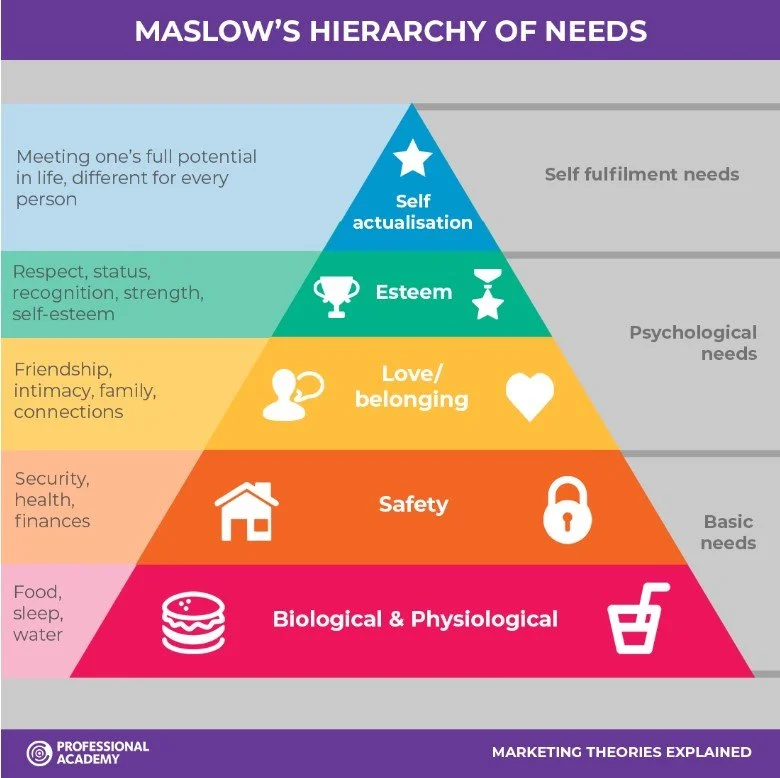
Our Goal must be to support the resident to move up the pyramid for a better life. We are responsible to see that the basic needs of oxygen, food water and elimination are met, but that should not be where it ends. Have you ever heard of the term failure to thrive? Or heard of a person that entered a nursing home and after a few months willed themselves to die? Just maybe if we encourage and continually work to move the resident up through basic needs, safety and to belonging and on our residents may live a happier longer life. So, as the resident's care giver, what ways can the CNA help the resident reach self-actualization?
Basic Needs
Maslow's Heirarchy of needs explains that humans prioritize their concerns. They are less concerned about how their hair looks if they haven't eaten in three days, for example. So by providing a resident's basic needs- breathing, eating, drinking, elimination, etc- the CNA is helping the resident to feel secure in that area of their life so they can move on up the pyramid.
Safety and Security
To help a resident feel safe and secure, it is essential that the CNA demonstrate that they are cautious and careful when caring for a resident's needs. By answering their call lights promptly, putting the brake on the wheelchair for a transfer, closing the curtains before undressing them, the CNA is showing the resident that they are safe and secure. Once a person feels safe, they can move on up the pyramid.
Love and Belonging
Obviously when the CNA shows kindness and warmth toward their residents they are helping the resident to feel love and belonging, but the CNA's role in this tier is not limitted to their own relationship with the resident. They can also play a major role in helping the resident form other bonds with other people. For example, showing support and interest for family and friends, encouraging a resident to join clubs and activities, and introducing them to other residents with similar interests can all help to secure a residents feeling of love and belonging.
Self Esteem
One's self esteem can be very fragile. The CNA should always be kind and complimentary with their residents, encouraging them to be their best, and celebrating with them in even the smallest of accomplishments. Helping the residents improve their self esteem goes well beyond just fixing their hair and making sure their clothes are clean, self esteem comes from feeling a sense of worth and self confidence.
Self Actualization
Self actualization is the ultimate goal in life. It is the ability to look around and feel good about yourself, your accomplishments, your relationships, and you are satisfied with where you are. The expectations of self actualization may change throughout life, and most often, people reach and fall from self-actualization many times in their life. For example, losing a job, a loved one, or one's health can shatter any sense of self actualization and drop their concerns all the way to the bottom of a pyramid, which is often where residents who are new admissions to a LTC have recently found themselves.
Psychosocial losses that may accompany aging or increase disability:
Ability to work, hold a job
Social relationships, companionship
Home and property
Physical losses that may accompany aging:
Diminished senses
Change in physical appearance
Physical ability, balance, mobility, speed of response time
Memory changes
Generalized decline due to cumulative effect of chronic illness
Psychosocial aspects of independent living at risk for loss when entering a long-term care facility
Privacy
Control over space, personal possessions
Responsibilities for home maintenance
Social contact outside the facility