
Unit 18
Death can occur suddenly without warning, or it can be expected. Older people or those with terminal illnesses may have time to prepare for death. A terminal illness is a disease or condition that will eventually cause death. Preparing for death is a process. It affects the dying person's emotions and behavior. The family and those close to the dying person will also be greatly affected.
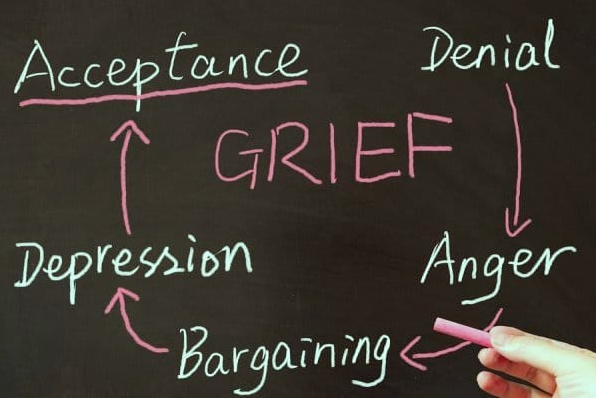
Grief is deep distress or sorrow over a loss. It is an adaptive, or changing process, and usually involves healing. Dr. Elisabeth Kubler-Ross studied and wrote about the grief process. Her book, On Death and Dying, describes the five stages that dying people and their loved ones may reach before death. It is important to understand that it is not linear, it is actually very normal to go from one stage to the next then back to a previous stage and so on. The hope is to work though all of the stages, the final goal being acceptance. These five stages are below:
Denial – "I feel fine."; "This can't be happening. Not to me!" Denial is usually only a temporary defense for the individual. This feeling is generally replaced with heightened awareness of situations and individuals that will be left behind after death.
Anger – "Why me? It's not fair!"; "How can this happen to me?"; "Who is to blame?" Once in the second stage, the individual recognizes that denial cannot continue. Because of anger, the person is very difficult to care for due to misplaced feelings of rage and envy. Any individual that symbolizes life or energy is subject to projected resentment and jealousy.
Bargaining – "Just let me live to see my children graduate."; "I'll do anything for a few more years."; "I will give my life savings if..." The third stage involves the hope that the individual can somehow postpone or delay death. Usually, the negotiation for an extended life is made with a higher power in exchange for a reformed lifestyle. Psychologically, the individual is saying, "I understand I will die, but if I could just have more time..."
Depression – "I'm so sad, why bother with anything?"; "I'm going to die... What's the point?"; "I miss my loved one, why go on?" During the fourth stage, the dying person begins to understand the certainty of death. Because of this, the individual may become silent, refuse visitors and spend much of the time crying and grieving. This process allows the dying person to disconnect oneself from things of love and affection. It is not recommended to attempt to cheer up an individual who is in this stage. It is an important time for grieving that must be processed.
Acceptance – "It's going to be okay."; "If I can't fight it, I may as well prepare for it." In this last stage, the individual begins to come to terms with their mortality or that of their loved one.
Advance Directives
Advance directives are legal documents that allow people to decide what kind of medical care they wish to have if they are unable to make those decisions themselves. An advance directive can also name someone else to make medical decisions for them in the event they no longer reasonably do so. An advance directive can also name someone else to make medical decisions for a person if that person becomes ill or disabled. A living will and a durable power of attorney for health care are examples of advance directives.
A living will outlines the medical care a person wants, or does not want, in case he or she becomes unable to make those decisions. It is called a living will because it takes effect while the person is still alive. It may also be called a directive to physicians, health care declaration, or medical directive. A living will is not he same thing as a will. A will is a legal declaration of how a person wishes his or her possessions to be distributed after death.
A do-not-resuscitate (DNR) order is another tool that helps medical providers honor wishes about care. A DNR is a medical order that tells medical professionals not to perform CPR. A DNR order means that medical personnel will not attempt emergency CPR if the person's heartbeat or breathing stops.
CNA's responsibilities:
By law, advance directives and DNR orders must be honored. Nursing assistants should respect each resident's decisions about advanced directives. This a very personal and private matter. CNA's should not make comments about residents' choices to anyone, including family members, other residents, or staff.
End of Life Care
Death is a very sensitive topic. Many people find it hard to discuss death. Feelings and attitudes about death can be formed by many factors.
Experiences with death
Personality type
Religious beliefs
Cultural background
Caring for the Dying resident
Diminished senses: Vision may begin to fail. Reduce glare and keep room lighting low. Hearing is usually the last sense to leave the body. Speak in a normal tone. Tell the resident about care that is being done or what is happening in the room. Do not expect an answer. Ask few questions. Observe body language to anticipate a resident's needs.
Care of the mouth and nose: Give oral care often. If the resident is unconscious, this should be done every two hours. Since their lips and nostrils may be dry or cracked, apply lubricant, such as lip balm, to the lips and nose.
Skin care: Give bed baths and incontinent care as needed. Provide frequent bedbaths for perspiring residents. Skin should be kept clean and dry. Change sheets and clothes for comfort. Keep sheets wrinkle-free. For their comfort it is important to provide careful skin care to prevent pressure sores or injury.
Pain control and comfort: Pain relief is critical. Residents may not be able to tell you that they are in pain. Observe body language and watch for other signs of pain- grimacing, moaning, clenching. Report them. Frequent changes of position, back massage, skin care, mouth care, and proper body alignment may help.
Environment: Put favorite objects and photographs where the resident can easily see them. Make sure the room is comfortable, appropriately lit and well-ventilated. When leaving the room, place the call light within reach. Do this even if the resident is unaware of his surroundings.
Emotional and spiritual support: Listening may be one of the most important things you can do for a resident who is dying. Pay attention to these conversations. Report any comments about fear to the nurse. Touch can also be important. Holding your resident's hand as you sit quietly can be very comforting. Do not avoid the dying person or his family. Do not deny that death is approaching. Do not tell the resident that anyone knows how or when it will happen. Do give accurate information in a reassuring way. If other residents ask for information about the dying resident, refer their questions to the nurse.
Some residents may seek spiritual comfort from clergy. Give privacy for visits from clergy, family, and friends. Do not discuss your religious or spiritual beliefs with residents or their families or make recommendations.
Dying with Dignity
CNA's can treat residents with dignity when they are approaching death by respecting their rights and their preferences. There are some legal rights to remember when caring for people who are dying.
The right to refuse treatment. CNA's must remember that whether they agree or disagree with a resident's decisions, the choice is not theirs. It belongs to the person involved and/or their family. CNA's should be supportive of family members and not judge them. They are most likely following the resident's wishes.
The right to have visitors. When death is close, it is an emotional time for all those involved. Saying goodbye can be a very important part of dealing with a loved one's death. It may also be reassuring to the person who is dying to have someone in the room, even if the person does not seem to be aware of his surroundings.
The right to privacy. Privacy is a basic legal right but privacy for visiting, or even when the person is alone, may be even more important now.
Other rights of a dying person are below in The Dying Person's Bill of Rights.
Be treated as a living human being until I die.
Maintain a sense of hopefulness, however changing its focus may be.
Be cared for by those who can maintain a sense of hopefulness, however changing this might be.
Express my feelings and emotions about my approaching death in my own way.
Participate in decisions concerning my care.
Expect continuing medical and nursing attentions even though "cure" goals must be changed to "comfort" goals.
Not die alone.
Be free from pain.
Have my questions answered honestly.
Not be deceived.
Have help from and for my family in accepting my death.
Die in peace and dignity.
Retain my individuality and not be judged for my decisions, which may be contrary to the beliefs of others.
Discuss and enlarge my religious and/or spiritual experiences, whatever theses may mean to others.
Expect that the sanctity of the human body will be respected after death.
Be cared for by caring, sensitive, knowledgeable people who will attempt to understand my needs and will be able to gain some satisfaction in helping me face my death.
CNA's responsibilities:
Respect the resident's wishes in all possible ways. Communication is extremely important at this time so that everyone understands what the resident's wishes are. Listen carefully for ideas on how to provide simple gestures that may be special and appreciated.
Do not isolate or avoid a resident who is dying. Enter his room regularly.
Be careful not to make promises that cannot or should not be kept.
Continue to involve the resident in his care and in facility activities. Be person-centered. Do not talk with other staff members about your personal life when caring for a resident.
Listen if a resident wants to talk but do not offer advice. Do not make judgemental comments.
Do not babble or act especially cheerful or sad. Be professional.
Keep the resident as comfortable as possible. The nurse needs to know immediately if pain medication is requested. Keep the resident clean and dry.
Assure privacy when it is desired.
Respect the privacy for the family and other visitors. They may be upset and not want to be social at this time. Still, they may welcome a friendly smile and not be totally isolated either.
Help with the family's physical comfort. If requested, get them coffee, water, chairs, blankets, etc.
Hospice Care
Hospice care is a special kind of care that focuses on the quality of life for people and their caregivers who are experiencing an advanced, life-limiting illness. Hospice care provides compassionate care for people in the last phases of incurable disease so that they may live as fully and comfortably as possible.
The hospice philosophy accepts death as the final stage of life: it affirms life, but does not try to hasten or postpone death. Hospice care treats the person and symptoms of the disease, rather than treating the disease itself. A team of professionals work together to manage symptoms so that a person’s last days may be spent with dignity and quality, surrounded by their loved ones. Hospice care is also family-centered – it includes the resident and the family in making decisions.
Hospice care can be given seven days a week, 24 hours a day when resident is actively dying but generally it is for support and each discipline (ie, nursing, Chaplin, social worker etc) visits an hour or two twice a week. It is available with a doctor's order. Hospice care may be given in a hospital, at a care facility or at home. Any caregiver may give hospice care, but often specially trained nurses and volunteers provide it.
In long-term care, goals focus on recovery or on the resident's ability to care for herself as much as possible. In hospice care, however, the goals are the comfort and dignity of the resident. This type of care is called palliative care. This is an important difference. CNA's will need to change their focus when caring for residents on hospice. The focus should be on pain relief, comfort, and residents to care for themselves. Residents who are dying need to feel independent for as long as possible. Caregivers should allow residents to have as much control over their lives as possible. Eventually, caregivers may have to meet all of the person's basic needs.
CNA's responsibilities:
Be a good listener. Some people, however, will not want to confide in their caregivers. Never push someone to talk.
Respect privacy and independence.
Be sensitive to individual needs. Ask family member or friends how you can help.
Be aware of your own feelings. Know your limits and respect them.
Recognize the stress. Talking with a counselor or support group may help. Remember, however, that specific information must be kept confidential.
Take good care of yourself. Eating right, exercising, and getting enough rest are ways of taking care of yourself. Talk about and acknowledge your feelings. Take time to do things for yourself. Take a break when you need to.
5 signs someone is actively dying
Some signs may indicate that death is approaching, although not every patient experiences each of these signs. In addition, the presence of one or more of these symptoms does not necessarily mean that the patient is close to death.
Drowsiness, increased sleep, and/or unresponsiveness
Plan visits and activities for times when the patient is alert. Speak directly to the patient. Talk as if
the person can hear, even if there is no response. Most patients are still able to hear after they
are no longer able to speak. Patients should not be shaken if they do not respond.Confusion about time, place, and/or identity of loved ones
Restlessness; visions of people and places that are not present; pulling at bed linens or clothing
Gently remind the patient of the time, date, and people who are with them. If the patient is
agitated, do not attempt to restrain the patient. Be calm and reassuring. Speaking calmly may
help to re-orient the patient.Decreased socialization and withdrawal
Speak to the patient directly. Let the patient know you are there for them. The patient may be aware and able to hear, but unable to respond. Professionals advise that gives the patient permission to “let go” can be helpful.
Decreased need for food and fluids, and loss of appetite. Allow the patient to choose if and when to eat or drink. Ice chips, water, or juice may be refreshing if the patient can swallow. Keep the patient's mouth and lips moist with products such as glycerin swabs and lip balm.
Loss of bladder or bowel control. Keep the patient as clean, dry, and comfortable as possible. Place disposable pads on the bed
beneath the patient and remove them when they become soiled.Darkened urine or decreased amount of urine. Some patients need a catheter inserted to avoid blockage.
Skin becomes cool to the touch, particularly the hands and feet. Skin may become bluish in color, especially on the underside of the body
Blankets can be used to warm the patient. Although the skin may be cool, patients are usually not aware of feeling cold. Caregivers should avoid warming the patient with electric blankets or heating pads, which can cause burns.
Rattling or gurgling sounds while breathing, which may be loud. Breathing may be irregular and shallow; slower; or alternate between rapid and slow. Apnea, or periods when the resident stops breathing for a short period of time, may occur. Turn the patient to the side and place pillows beneath the head and behind the back. Although labored breathing can sound very distressing to the caregiver, gurgling and rattling sounds do not cause discomfort to the patient. Some patients may need oxygen. If the patient is able to swallow, ice chips also may help. In addition, a cool mist humidifier may help make the patient's breathing more comfortable.
Increased difficulty controlling pain. Work with your supervising nurse on managing pain with medication. Explore methods such as
massage and relaxation techniques to help with pain.
Involuntary movements, changes in heart rate, and loss of reflexes in the legs and arms are additional signs that the end of life is near.
When Death Occurs
When death occurs
When death occurs, the body will not have a heartbeat, pulse, respiration, or blood pressure. They eyelids may remain open or partially open with the eyes in a fixed stare. The mouth may remain open. The body may be incontinent of urine and stool. Between two to six hours after death, the muscles in the body become stiff and rigid. This is a temporary condition called rigor mortis, which is Latin for stiffness of death. These things are a normal part of death but they can be frightening. CNA's should inform the nurse immediately to help confirm the death.
Postmortem care is care of the body after death. It takes place after the resident has been declared dead by a nurse or doctor. CNA's must be sensitive to the needs of the family and friends after death. Family members may wish to sit by the bed to say goodbye. They may wish to stay with the body for a while. They should be allowed to do these things. CNA's should be aware of religious and cultural practices that the family wants to observe. CNA's should follow their facility's policies and only perform assigned tasks. When family is not at the bedside, usually the C.N.A will ready the body for the family to come say their goodbyes, although some, especially if not in close proximity, they will want the body to be taken to the mortuary immediately, the nurse will make these calls and inform the C.N.A. As a new C.N.A it can feel uncomfortable giving postmortem care but please remember, it is the last caring thing you can do for this person, it is a showing of dignity and respect. It has often been considered an honor.
CNA's responsibilities:
Bathe the body. Be gentle to avoid bruising. Place drainage pads where needed. This is most often under the head and/or under the genital and anal area. Follow standard precautions.
Do not remove any tubes or other equipment attached to the body. A nurse or someone at the funeral home will do this.
If instructed, put dentures back in the mouth. Close the mouth. If not possible, place dentures in a denture cup near the resident's head.
Close the eyes carefully.
Position the body on the back with legs straight and arms folded across the abdomen. Put a small pillow under the head.
Follow facility policy about personal items. Check to see if you should remove jewelry. Always have a witness if personal items are removed or given to a family member. Document what was given to whom.
Strip the bed after the body has been removed. Open windows to air the room as needed. Straighten up.
Document according to your facility's policy.
Dealing with grief after the death of a loved is an individual process. No two people will grieve in exactly the same way. It is also a changing or adaptive process. Feelings may change from day to day, or even hour to hour. This is normal. Clergy, counselors, or social workers can help people who are grieving. Family or friends may have any of these reactions to the death of a loved one:
Shock
Denial
Anger
Guilt
Regret
Relief
Sadness
Loneliness
Caring for residents at the end of life can be a rewarding experience for you. It emphasizes the resident as a whole being. It draws on a CNA's skillfulness to communicate with people in an intimate situation, and at a time when they are very much appreciated.