Unit 15
Skin changes with age. It becomes thinner, loses fat, and no longer looks as plump and smooth as it once did. Veins and bones can be seen more easily. Healing takes much longer for scratches, cuts, and a little accidental bump on the wall can end in a huge bruise. Years of sun tanning or being out in the sunlight for a long time may lead to wrinkles, dryness, age spots, and even cancer.
Skin tears
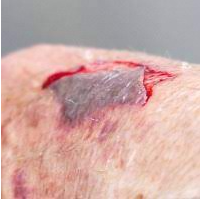
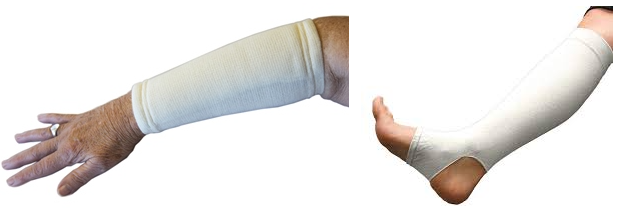
Elderly skin is thin and fragile and a simple brush again the door jam while exiting the room can result in a large tearing of the skin. Skin tears can be simple such as a split in the skin, or be more complex, to include skin loss, blood clots, and bruising. Skin tears mainly occur on the arms and legs, but can occur on any area that is bumped or scraped. The C.N.A needs to be very careful and when pushing a resident in a w/c check that the elbows are inside of the arm rest so as not to get caught on door jams or walls. GeriArms or GeriLegs are a thick sock-like sleeve that can be worn to protect the arms or legs.
Shearing
Shearing happens when the surface skin is removed by dragging the body part across something like the bedsheets, wheelchair cushion or wheel, sliding board. It can look red, purple, or irritated or like a blister with the top layer of skin removed. If the top layer of the skin is removed, an opening in the protective barrier can allow bacteria or viruses to enter the body. The C.N.A needs to put a pillow or elevate the knees in the bed of a person that sits up in bed frequently to prevent sliding down. When assisting a person who has slid down back up higher in the bed follow best practices of lowering the head of bed, bending the knees and using a draw sheet to move the resident back up to the top of the bed.
Pressure Ulcers/Injury
Pressure injury or bed sores (an old common name) happen when a person is in one position too long and the weight of the body against the surface of the bed or chair cuts off blood supply. Those that spend extended amounts of time in bed or in a wheelchair are at highest risk. These most commonly happen over a bony prominence such as coccyx (tail bone), heels, and behind the ears of a person with oxygen, hearing aids and glasses. These wounds if not caught early can become very large and deep and infected causing pain and prolonged healing.
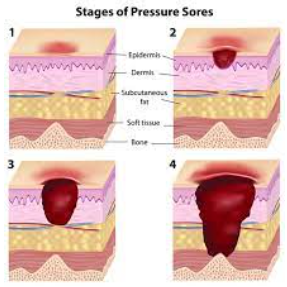
The C.N.A is the most important person in preventing pressure injury by frequently repositioning (usually every 2 hours) the residents and providing pressure relieving mattresses and w/c cushions. Checking and changing garments when they are wet or soiled in a timely manner is extremely important as well.
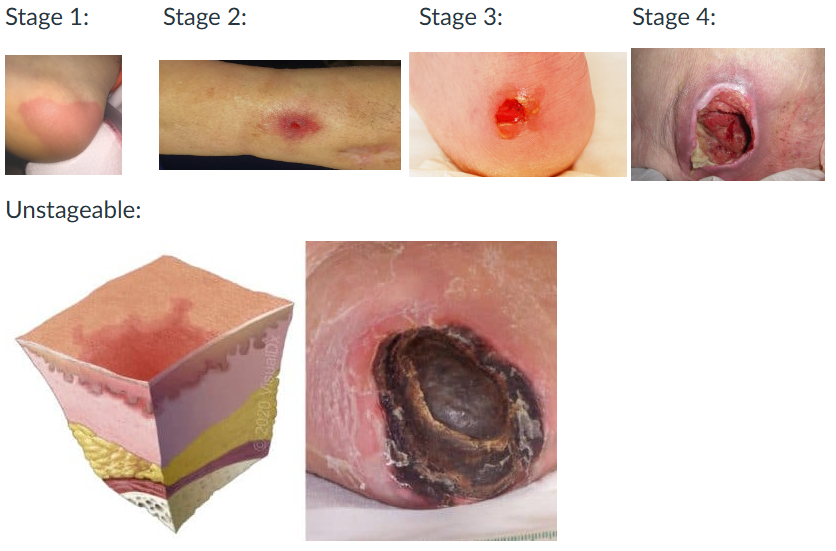
Below are pictures of pressure injuries and their stages.