Unit 15
Diabetes
Because we have already covered diabetes in an earlier unit it will be limited here to points to remember.
Observe your diabetic residents for signs of hypo and hyperglycemia - take action and quickly report the the nurse. Remember shaky, sweaty, crazy means they are hypo and need food fast.
Never cut the nails of a person living with diabetes, this should only be done by the nurse. Ingrown toenails in a diabetic can actually be dangerous, report this to the nurse.
Look at your resident's skin every day, especially the feet, as just a tiny sore and rapidly develop into a seriously infected wound that is very difficult to heal. Report any redness or sores even if the resident reports no pain. They should wear shoes when walking.
Hypothyroidism
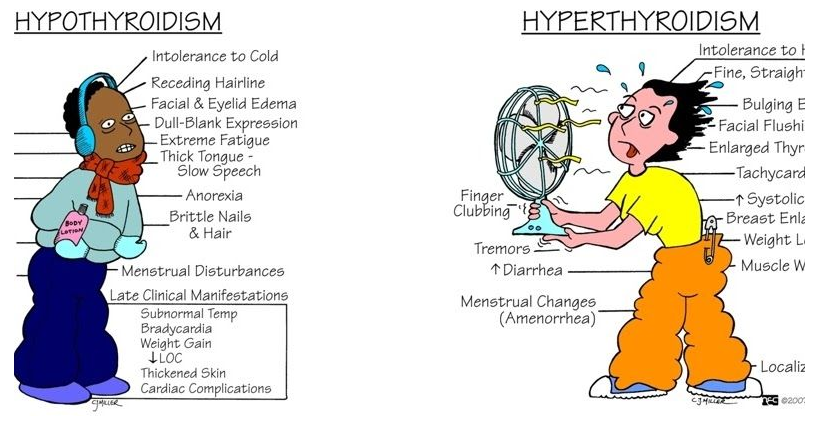
A condition in which the thyroid gland (located in the neck) doesn't produce enough thyroid hormone and can affect the heart rate, body temperature, and metabolism. Hypothyroidism is very common in older women.
Common symptoms include fatigue, cold sensitivity, constipation, dry skin, watery bags under the eyes, and unexplained weight gain.
These residents tend to be cold and want a sweater and their room kept very warm. Remember it is their home, the temperature and their clothing needs to suit them. Lotion to dry skin is helpful, and give the resident ample rest times.
Hyperthyroidism
Hyperthyroidism is too much thyroxine hormone. It can increase metabolism.
Symptoms include unexpected weight loss, rapid or irregular heartbeat, sweating, and irritability, although the elderly often experience no symptoms. Treatments include radioactive iodine, medications, and sometimes surgery. The C.N.A just needs to be aware of these symptoms so as to report them when observed.