
Unit 19
An ostomy is the surgical creation of an opening from an area inside the body to the outside. The terms colostomy and ileostomy refer to the surgical removal of a portion of their intestine. In a resident with one of these ostomies, the end of the intestine is brought out of the body through an artificial opening in the abdomen. This opening is called a stoma. Stool, or feces, are eliminated through the ostomy rather than through the anus. An ostomy may be necessary due to a fecal impaction, bowel disease, cancer, or trauma. It may be temporary or permanent.
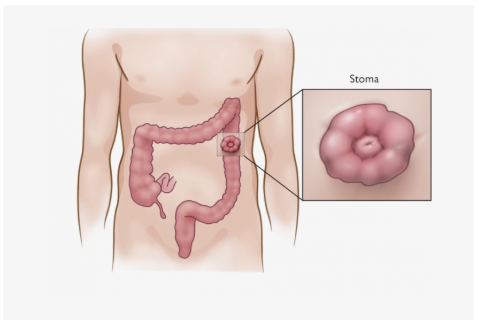
The term colostomy and ileostomy tell what part of the intestine was removed and what will expel from the stoma. A colostomy is a surgically created opening into the large intestine to allow stool to be expelled. With a colostomy, stool will generally be semi-solid. An ileostomy is a surgically created opening into the end of the small intestine to allow stool to be expelled. Stool will be liquid and may be irritating to the resident's skin. Residents who have had an ostomy wear a disposable pouching system that fits over the stoma to collect the feces. The pouching system is attached to the skin by adhesive; a belt may also be used to secure it.
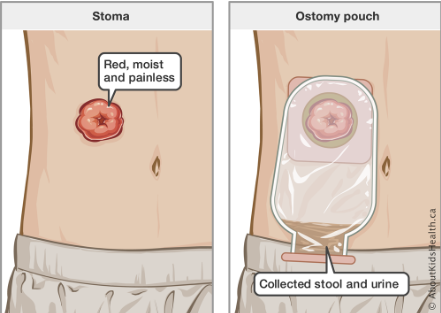
Many people manage the ostomy appliance by themselves. Nursing assistants should receive training before providing ostomy care. CNAs should give careful skin care. They should empty and clean or replace the ostomy pouch whenever there is feces. CNA's should always wear gloves and wash hands carefully when providing ostomy care. They can help by teaching proper handwashing to residents with ostomies.
Caring for an ostomy
CNA's responsibility:
Wash your hands.
Explain procedure to the resident. Speak clearly, slowly, and directly. Maintain face-to-face contact whenever possible.
Provide privacy
Adjust bed to a safe level.
Put on gloves.
Place bed protector under resident. Cover resident with a bath blanket. Pull down the top sheet and blankets. Expose only the ostomy site. Offer resident a towel to keep clothing dry.
Undo the ostomy belt if used. Remove the ostomy pouch carefully. Place it in the plastic bag. Note the color, odor, consistency, and amount of stool in the pouch.
Wipe the area around the stoma with disposable wipes for ostomy care. Discard the wipes in the plastic bag.
Using a washcloth and warm water, wash the area in one direction, away from the stoma. Rinse. Pat dry with another towel.
Place the clean ostomy drainage pouch on the resident. Hold in place and seal securely. Make sure the bottom of the pouch is clamped.
Remove the bed protector and discard. Place soiled linens in the proper container. Discard the plastic bag properly.
Remove and discard gloves.
Wash your hands.
Return bed to lowest position. Remove privacy measures.
Place call light within resident's reach.
Document procedure using facility guidelines.
Observations
Notify nurse promptly of any potential problem!
Observe resident’s defecation. Report color, consistency, amount, and frequency. Save for
nurse if feces appear other than normal.Observe stoma and skin around stoma for discoloration or irritation. A normal stoma is red and moist and looks like the lining of the mouth. Call the nurse if the stoma is very red, black, or blue, or if swelling or bleeding is present. Report any signs of skin breakdown around the stoma.