
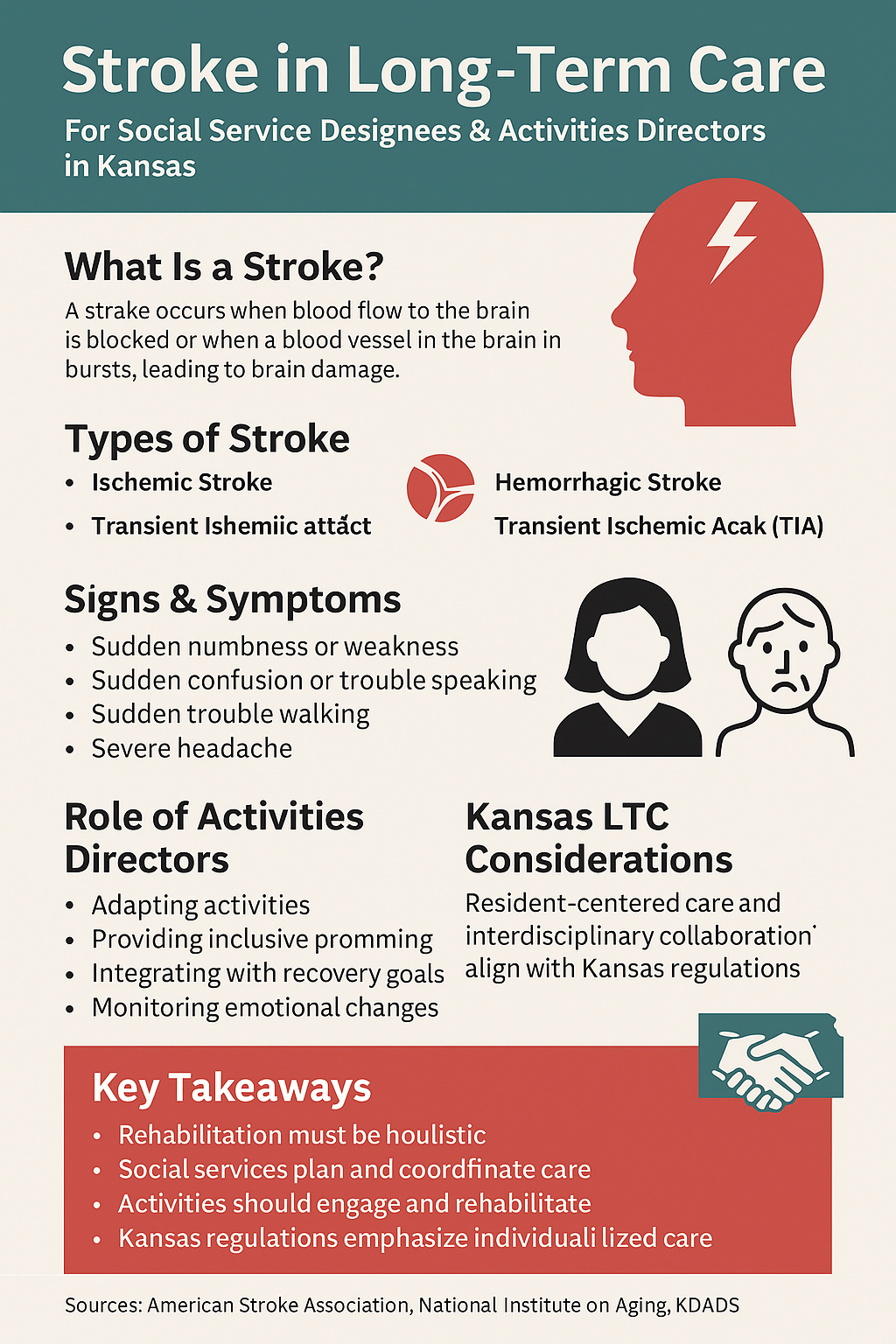
Understanding Stroke in Long-Term Care

Audience: Social Service Designees & Activities Directors in Kansas

What is a Stroke?

A stroke occurs when the blood flow to a part of the brain is interrupted or reduced, preventing brain tissue from getting oxygen and nutrients. Brain cells begin to die in minutes. Strokes can cause long-term disabilities, communication difficulties, emotional instability, and mobility issues—making specialized care in long-term settings essential.

Types of Stroke

  • Ischemic Stroke: Caused by a blockage in a blood vessel supplying the brain.
  • Hemorrhagic Stroke: Caused by bleeding in or around the brain.
  • Transient Ischemic Attack (TIA): A temporary blockage—also called a mini-stroke.

Signs & Symptoms

  • Sudden numbness or weakness, especially on one side of the body
  • Sudden confusion, trouble speaking, or difficulty understanding speech
  • Sudden trouble seeing in one or both eyes
  • Sudden trouble walking, dizziness, loss of balance or coordination
  • Severe headache with no known cause

Role of Social Service Designees

Social service designees play a key role in identifying post-stroke needs, coordinating care plans, and providing psychosocial support. Responsibilities include:

  • Conducting assessments to determine emotional, mental, and social needs post-stroke
  • Coordinating with interdisciplinary teams to support recovery goals
  • Educating families on stroke impacts and community resources
  • Advocating for residents’ rights and preferences during rehabilitation

Role of Activities Directors

Activities Directors play a pivotal role in supporting stroke survivors through therapeutic recreation, cognitive stimulation, and social engagement. Key contributions include:

  • Adapting activities for residents with speech, motor, or cognitive impairments
  • Providing inclusive programming to build confidence and promote social interaction
  • Working with occupational and speech therapists to integrate activities into recovery goals
  • Monitoring emotional changes and referring to social services as needed

Kansas LTC Considerations

In Kansas, long-term care regulations emphasize resident-centered care and interdisciplinary collaboration. Social services and activity programs must meet the individual needs of each resident, including those recovering from strokes. Facilities are required to involve residents and families in care planning and to promote the highest possible level of functioning.

Helpful Resources

Key Takeaways

  • Stroke impacts both physical and mental health—rehabilitation must be holistic.
  • Social services must coordinate psychosocial support and care planning.
  • Activity programming should be inclusive, engaging, and rehabilitative.
  • Kansas LTC regulations support individualized and interdisciplinary care.

Sources: American Stroke Association, National Institute on Aging, KDADS