
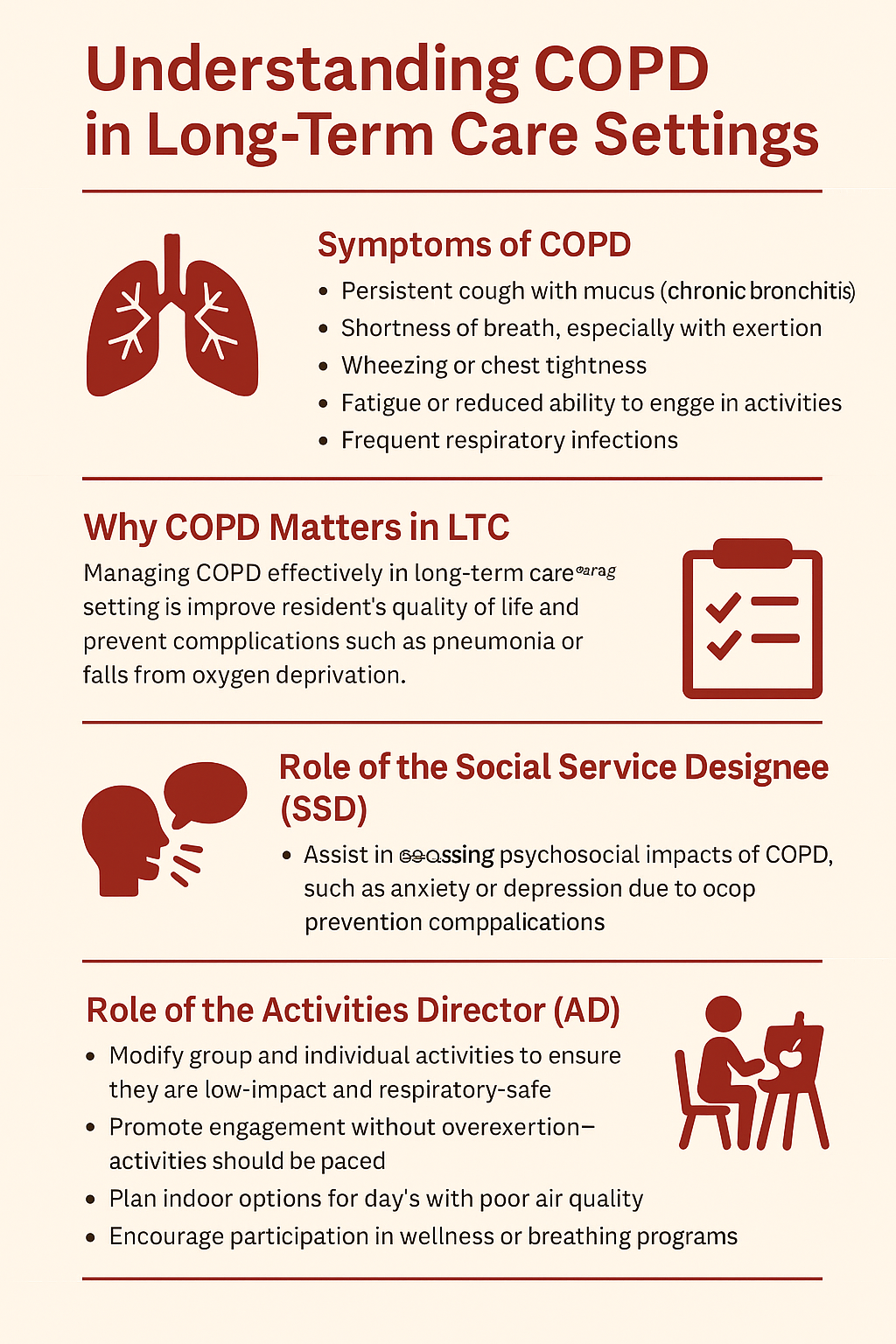
Understanding COPD in Long-Term Care Settings

Chronic Obstructive Pulmonary Disease (COPD) is a progressive lung condition that includes chronic bronchitis and emphysema. It limits airflow and makes breathing difficult. COPD is common among elderly residents in long-term care (LTC) facilities, especially those with a history of smoking or prolonged exposure to lung irritants.

Symptoms of COPD

  • Persistent cough with mucus (chronic bronchitis)
  • Shortness of breath, especially with exertion
  • Wheezing or chest tightness
  • Fatigue or reduced ability to engage in activities
  • Frequent respiratory infections

Why COPD Matters in LTC

Managing COPD effectively in a long-term care setting is crucial to improving the resident's quality of life and preventing complications such as pneumonia, falls from oxygen deprivation, or hospitalization. This is especially important in Kansas, where regulations emphasize resident-centered care and maintaining functional abilities.

Role of the Social Service Designee (SSD)

  • Assist in assessing psychosocial impacts of COPD, such as anxiety or depression due to reduced mobility.
  • Coordinate care planning conferences with medical staff and family members to address emotional and social needs.
  • Educate residents and families about community resources, smoking cessation programs, and support groups.
  • Monitor for signs of social isolation or withdrawal resulting from activity limitations.

Role of the Activities Director (AD)

  • Modify group and individual activities to ensure they are low-impact and respiratory-safe (e.g., seated exercises, crafts).
  • Promote engagement without overexertion—activities should be paced and allow for oxygen use if needed.
  • Plan indoor options for days with poor air quality, which can exacerbate symptoms.
  • Encourage participation in wellness or breathing programs (as approved by nursing staff).

Best Practices for COPD Support in LTC

  • Ensure oxygen tanks are safely handled and readily available during activities or outings.
  • Collaborate with nursing staff to identify residents with worsening symptoms.
  • Provide emotional reassurance and routine—residents with COPD often benefit from structure and predictability.
  • Document changes in participation, mood, or ability related to COPD.

Kansas-Specific Considerations

Under Kansas regulations (e.g., Kansas Department for Aging and Disability Services - KDADS), long-term care facilities must ensure residents receive care that supports their physical, mental, and psychosocial well-being. This includes proper documentation of diagnoses like COPD in care plans and adjusting activities to fit residents’ medical needs.

Conclusion

Understanding COPD is essential for Social Service Designees and Activities Directors in LTC facilities. By recognizing the symptoms and adjusting services accordingly, these professionals play a key role in improving residents’ comfort, emotional health, and quality of life.