Chapter 1
The Direct Care Team
Overview
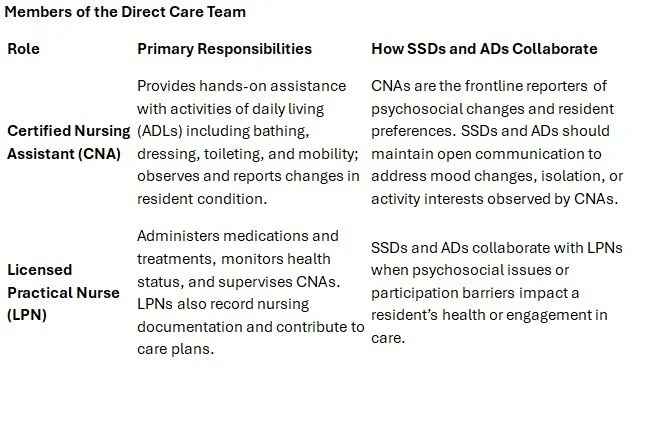
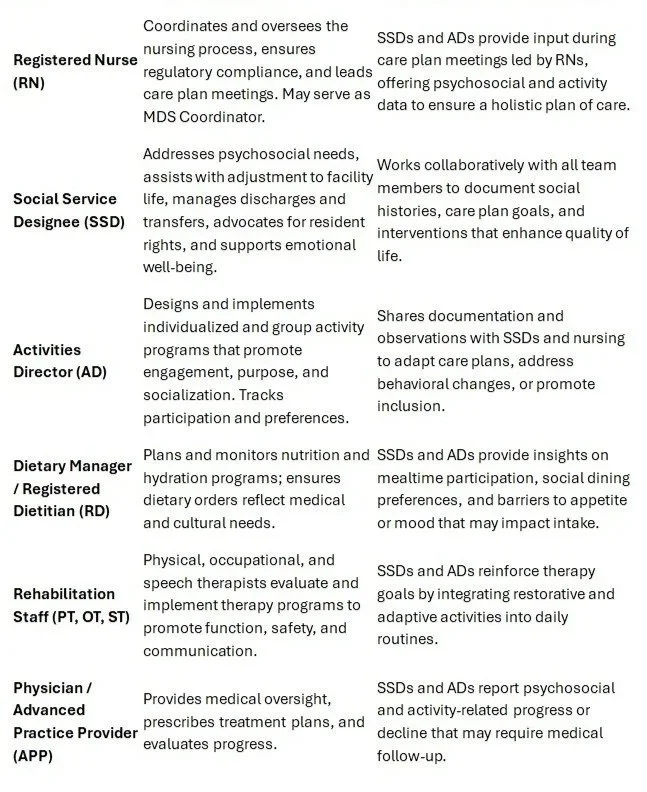
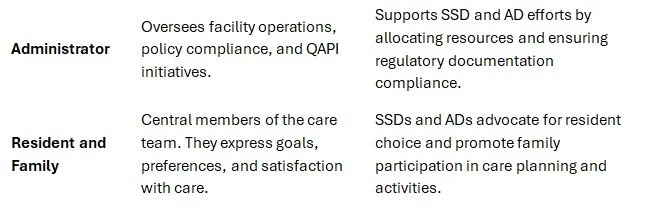
In Kansas long-term care (LTC) facilities, high-quality resident outcomes depend on effective teamwork across multiple disciplines. The Direct Care Team is the foundation of daily care delivery—responsible for providing, documenting, and communicating individualized resident care. For Social Service Designees (SSDs) and Activities Directors (ADs), understanding the structure and responsibilities of each team member ensures clear collaboration and accurate interdisciplinary documentation.
Interdisciplinary Collaboration
Effective communication among team members ensures that documentation accurately reflects the resident’s holistic needs. Interdisciplinary collaboration may occur through:
· Daily Stand-Up Meetings: Brief updates about resident status, new behaviors, or psychosocial concerns.
· Care Plan Conferences: Scheduled discussions that integrate medical, psychosocial, and recreational goals.
· Charting and Communication Logs: Shared documentation systems that link nursing, social services, and activities.
· Behavioral Reviews: Collaborative evaluation of mood, adjustment, or participation issues using observation data from multiple disciplines.
SSDs and ADs must document their contributions clearly and ensure that observations are communicated to nursing and administration to promote continuity of care and compliance with CMS and KDADS requirements.
---
Communication and Reporting
Each member of the direct care team plays a role in maintaining consistent communication. SSDs and ADs should:
· Participate in shift report exchanges and document relevant psychosocial updates.
· Use objective, professional language when documenting team communications.
· Maintain confidentiality in accordance with HIPAA and facility policy.
· Encourage open feedback loops to address resident needs proactively.
---
Summary
The Direct Care Team represents a unified approach to long-term care in Kansas facilities. SSDs and ADs rely on effective collaboration with nursing, therapy, dietary, and administrative staff to ensure residents receive person-centered, compassionate care. Recognizing each team member’s expertise enhances documentation accuracy, promotes compliance, and ultimately improves residents’ physical, emotional, and social well-being.