
Chapter 2
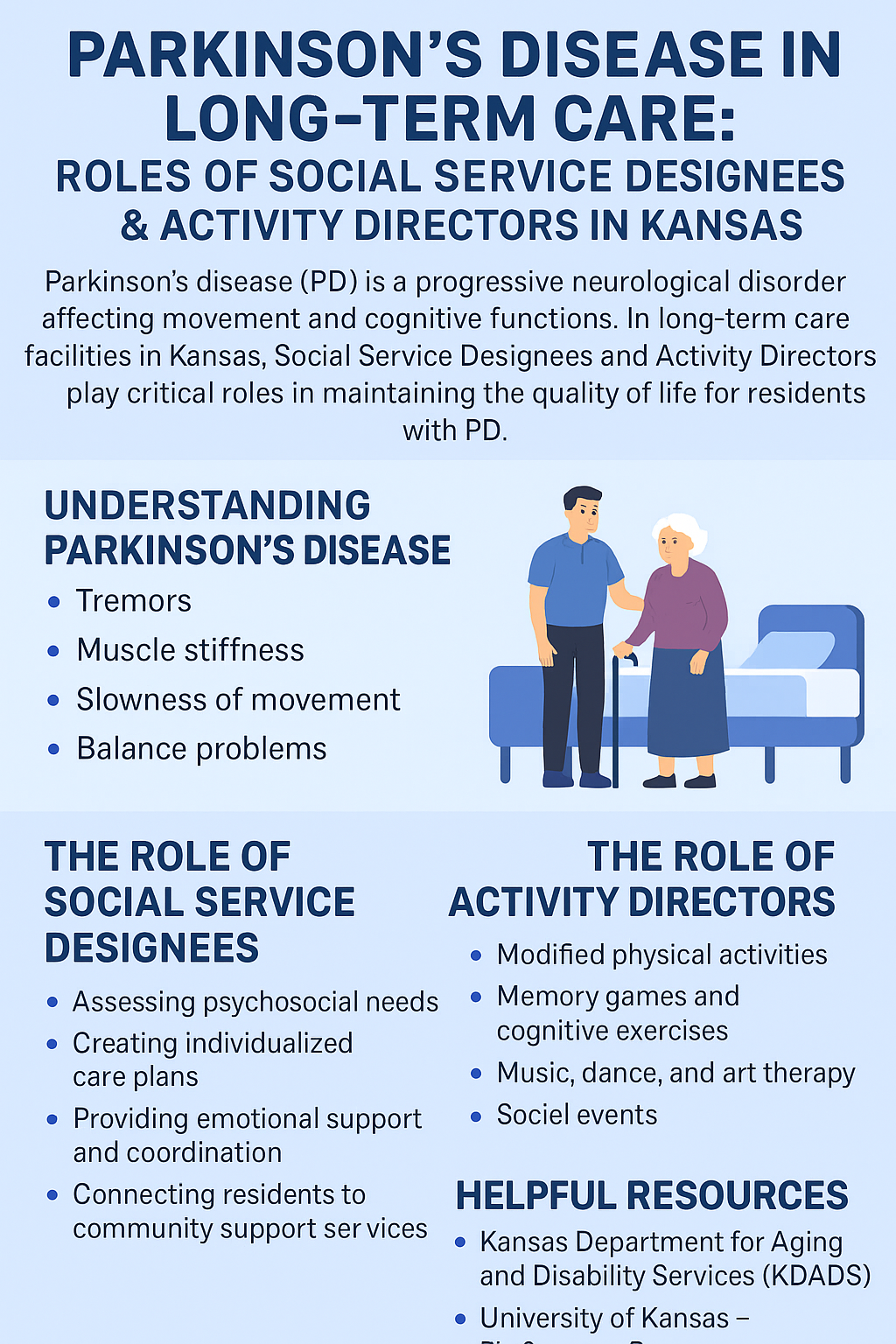
Parkinson’s disease (PD) is a progressive neurological disorder affecting movement and cognitive functions. In long-term care facilities in Kansas, Social Service Designees and Activity Directors play critical roles in maintaining the quality of life for residents with PD.
PD is marked by symptoms such as tremors, muscle stiffness, slowness of movement, and balance problems. As the disease progresses, residents may also experience communication challenges, mood changes, and increased dependence on staff for daily care.
In Kansas, Social Service Designees are responsible for supporting the emotional and social well-being of residents. Key responsibilities include:
Activity Directors focus on promoting engagement and wellness. For residents with Parkinson’s disease, this may include:
Long-term care communities such as Meadowlark in Manhattan, Kansas, are known for comprehensive PD support programs. These include exercise classes, specialized support groups, and personalized activity planning. These services align with Kansas standards for elder care support.
Watch this informative video from the Parkinson’s Foundation on supporting individuals with Parkinson’s in long-term care:
Source: Parkinson's Foundation