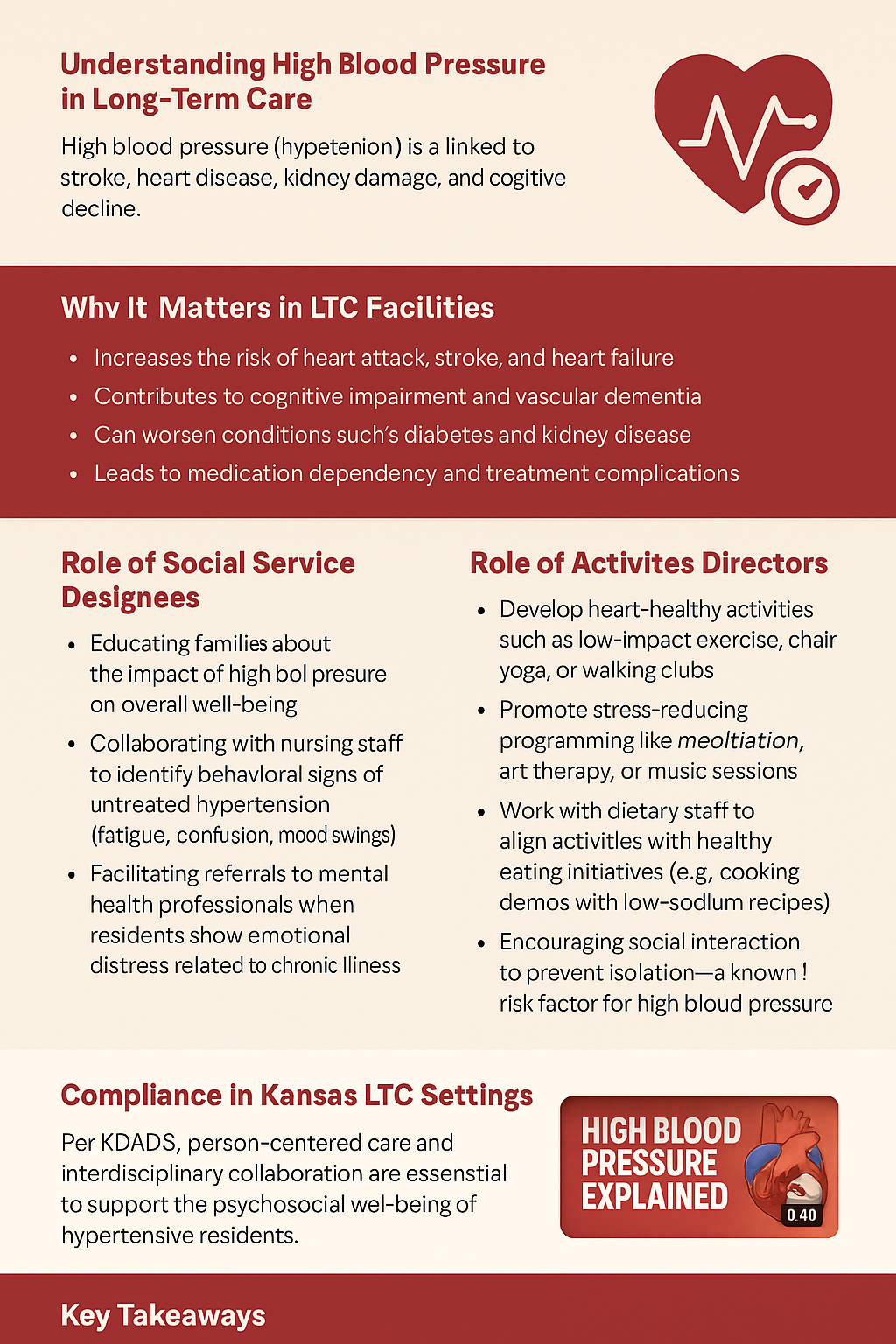
Understanding High Blood Pressure in Long-Term Care

High blood pressure (hypertension) is a chronic condition affecting millions of older adults. In long-term care (LTC) settings, managing hypertension is critical due to its links to stroke, heart disease, kidney damage, and cognitive decline. As Social Service Designees (SSDs) and Activity Directors (ADs), understanding the social, emotional, and physical impact of high blood pressure allows you to better support residents' needs and help coordinate holistic care.

What Is High Blood Pressure?

High blood pressure occurs when the force of the blood pushing against artery walls is consistently too high. Normal readings are below 120/80 mmHg. Persistent readings above 130/80 mmHg are considered elevated or hypertensive. This condition often presents no symptoms, which is why it's called the “silent killer.”

Why It Matters in LTC Facilities

  • Increases the risk of heart attack, stroke, and heart failure.
  • Contributes to cognitive impairment and vascular dementia.
  • Can worsen conditions such as diabetes and kidney disease.
  • Leads to medication dependency and treatment complications.

Role of Social Service Designees

SSDs help residents and families cope with the emotional and social challenges of chronic diseases like hypertension. Responsibilities include:

  • Educating families about the impact of high blood pressure on overall well-being.
  • Collaborating with nursing staff to identify behavioral signs of untreated hypertension (fatigue, confusion, mood swings).
  • Facilitating referrals to mental health professionals when residents show emotional distress related to chronic illness.
  • Assisting with care planning that respects cultural, religious, and social factors influencing treatment adherence.

Role of Activities Directors

Physical activity and mental engagement are powerful tools in hypertension management. ADs can:

  • Develop heart-healthy activities such as low-impact exercise, chair yoga, or walking clubs.
  • Promote stress-reducing programming like meditation, art therapy, or music sessions.
  • Work with dietary staff to align activities with healthy eating initiatives (e.g., cooking demos with low-sodium recipes).
  • Encourage social interaction to prevent isolation—a known risk factor for high blood pressure.

Compliance in Kansas LTC Settings

According to Kansas Department for Aging and Disability Services (KDADS), person-centered care and interdisciplinary collaboration are essential. SSDs and ADs must work as part of the care team to support the psychosocial well-being of hypertensive residents, ensuring plans of care meet both medical and quality-of-life goals.

Key Takeaways

  • Hypertension is common but dangerous—monitoring and lifestyle changes are crucial.
  • SSDs address emotional needs, assist families, and promote care planning.
  • ADs encourage physical activity, reduce stress, and support dietary habits.
  • Effective care requires a holistic, team-based approach per Kansas LTC regulations.

Sources:
Centers for Disease Control and Prevention (CDC). "High Blood Pressure." Retrieved from https://www.cdc.gov/bloodpressure/
Kansas Department for Aging and Disability Services (KDADS). LTC Policies and Resources. https://www.kdads.ks.gov