Chapter 1
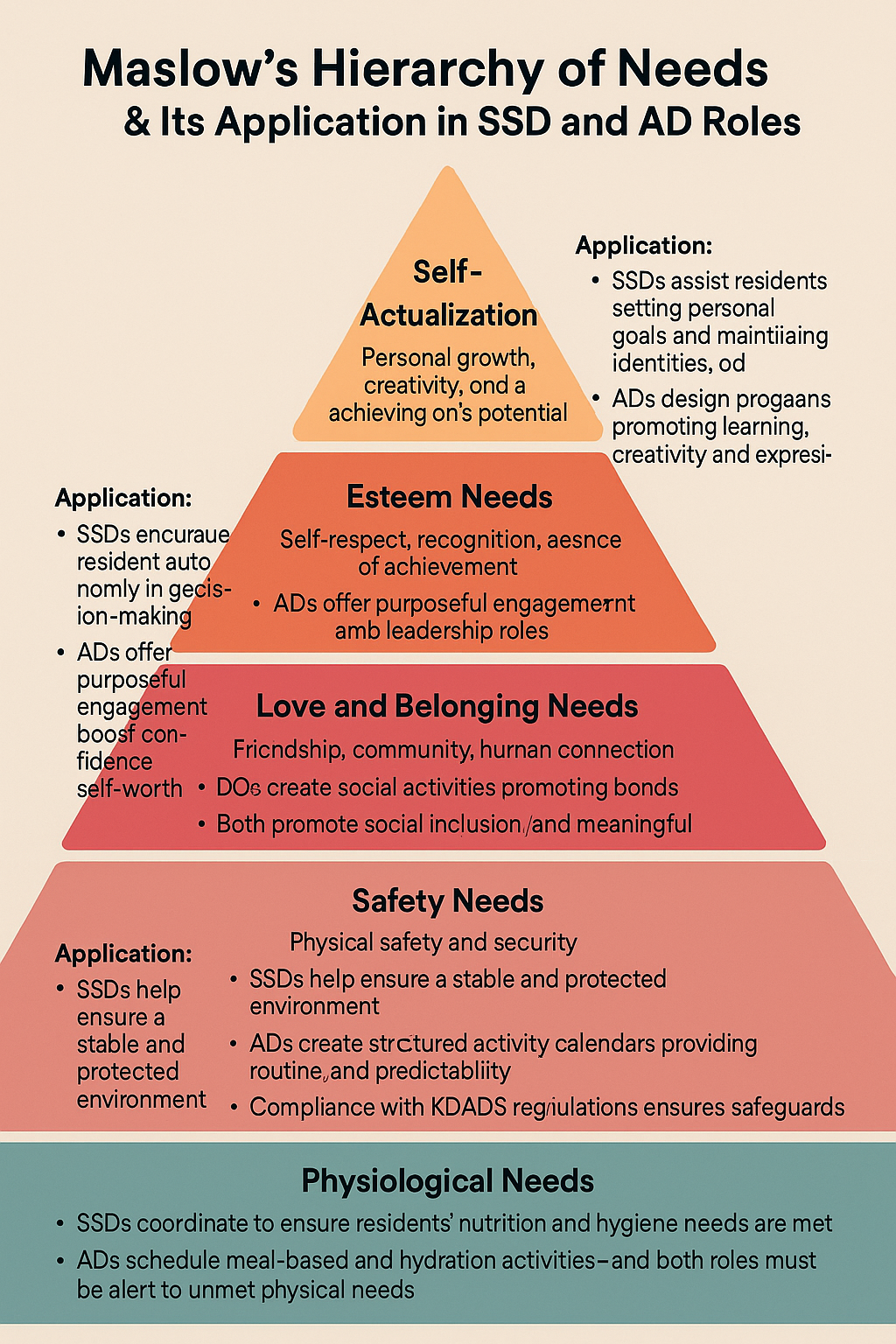
Maslow’s Hierarchy of Needs is a psychological theory proposed by Abraham Maslow that outlines a five-tier model of human needs, often depicted as a pyramid. In the context of Social Service Designees (SSDs) and Activities Directors (ADs) working in long-term care facilities in Kansas, this framework offers essential guidance for how to support residents' holistic well-being. Understanding and applying this hierarchy can significantly enhance the care, programming, and advocacy efforts in these roles.
Maslow’s Hierarchy of Needs & Its Application in SSD and AD Roles
1. Physiological Needs (Base Level)
These include basic survival needs: food, water, shelter, sleep, hygiene, and medical care.
Application:
SSDs coordinate with nursing and dietary staff to ensure residents’ nutritional and hygiene needs are met.
ADs schedule meal-based and hydration activities (e.g., cooking classes or smoothie socials) that promote physical health.
Both roles must be alert to signs that residents’ physical needs are unmet (e.g., signs of malnutrition, fatigue, or neglect).
2. Safety Needs
Safety encompasses both physical safety (free from harm) and psychological security (predictability, order).
Application:
SSDs help ensure residents live in a stable and protected environment, often mediating conflicts or addressing concerns related to abuse, neglect, or exploitation.
ADs create structured activity calendars to provide routine and predictability, which reduce anxiety for residents with dementia or cognitive decline.
Compliance with Kansas Department for Aging and Disability Services (KDADS) regulations ensures legal and physical safeguards are in place.
3. Love and Belonging Needs
These needs focus on friendship, community, and human connection.
Application:
SSDs assess social history and support systems to promote meaningful relationships and prevent loneliness.
ADs facilitate group activities, social events, family nights, and intergenerational programs to foster bonds.
Both roles promote resident integration and social inclusion, essential under Person-Centered Care models in Kansas.
4. Esteem Needs
This includes self-respect, recognition, and a sense of achievement.
Application:
SSDs encourage resident autonomy in decision-making and self-advocacy, supporting personal dignity.
ADs offer purposeful engagement like leadership roles in resident councils or volunteer opportunities within the facility.
Programs that recognize achievements (e.g., birthdays, talents, or anniversaries) help boost confidence and self-worth.
5. Self-Actualization (Top Level)
This refers to personal growth, creativity, and achieving one’s potential.
Application:
SSDs help residents set personal goals and maintain spiritual, cultural, and personal identities.
ADs design programs that promote lifelong learning, creativity, and expression—such as art, music, gardening, or writing.
Encouraging residents to pursue hobbies or contribute ideas supports their sense of purpose, even in later stages of life.
Why This Matters in Kansas
In Kansas, long-term care facilities are required to provide services that address the whole person—mind, body, and spirit—as part of person-centered care standards. SSDs and ADs are vital in fulfilling these standards. By applying Maslow’s Hierarchy, they can:
Address unmet needs that may affect behavior or well-being.
Develop individualized care and activity plans.
Promote dignity, rights, and quality of life as mandated by KDADS and CMS regulations.