Chapter 1
Learning About Your Residents’ Needs in Long-Term Care
Overview
In long-term care settings, understanding and addressing residents’ individual needs is fundamental to providing high-quality, person-centered care. For professionals in Social Service Designee and Activities Director roles, this means going beyond physical care to support emotional, social, cultural, cognitive, and spiritual well-being. In Kansas, regulations emphasize the importance of holistic assessments and individualized care planning, making this a key responsibility for both positions.
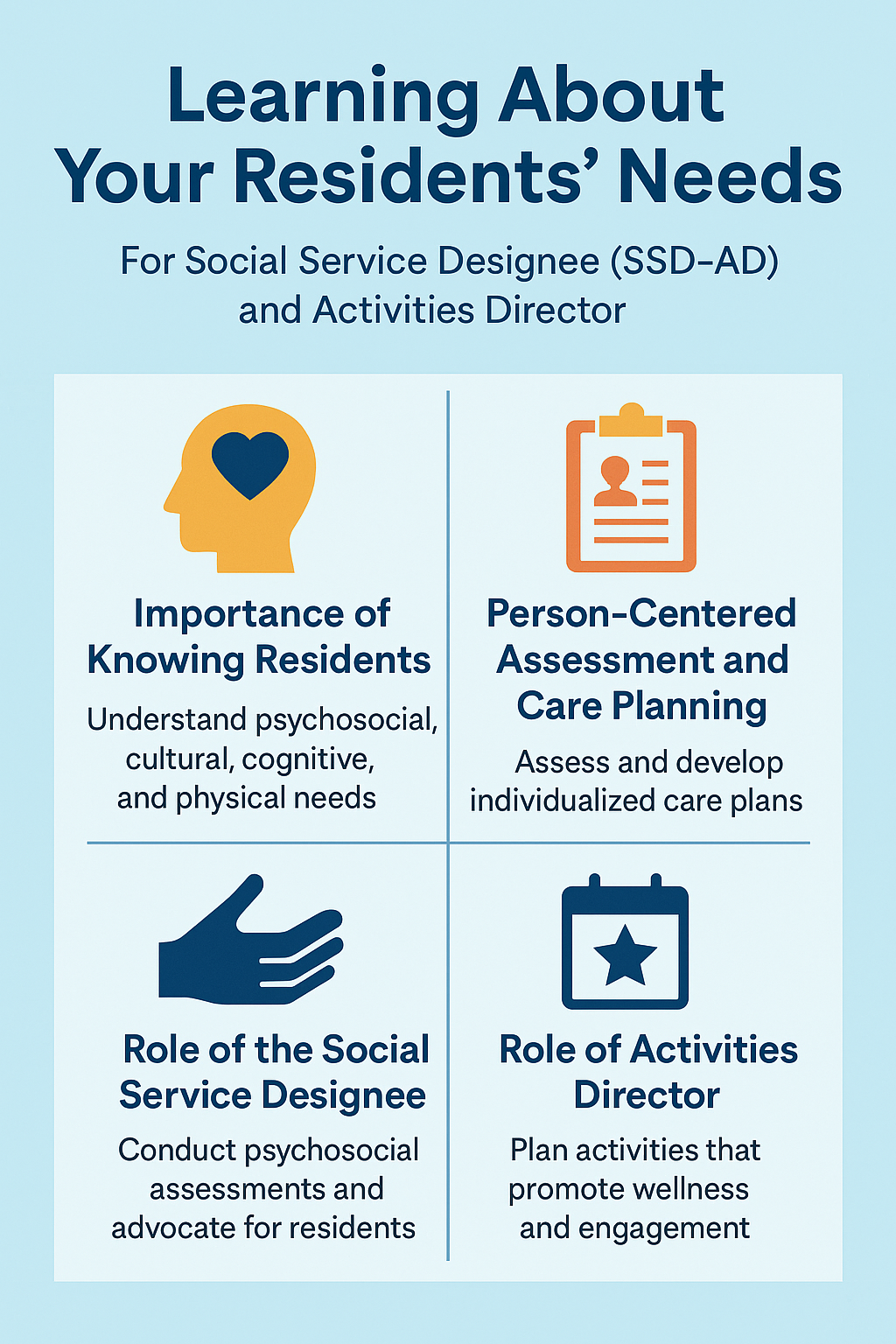
1. The Importance of Knowing Your Residents
Every resident brings a unique background, personality, and set of preferences. Learning about each resident's history, values, beliefs, hobbies, and needs is critical in promoting a meaningful quality of life.
Key areas of understanding include:
Psychosocial needs – Emotional health, mental stimulation, companionship
Cultural and spiritual needs – Language preferences, religious practices, customs
Cognitive and physical abilities – Communication style, memory capacity, mobility, sensory impairments
Life history and preferences – Hobbies, career background, routines, favorite music or foods
For Social Service Designees, this understanding is crucial in developing effective care plans, advocating for resident needs, and resolving conflicts. For Activities Directors, knowing a resident’s likes and abilities allows for planning purposeful engagement.
2. Person-Centered Assessment and Care Planning
Kansas long-term care regulations (K.A.R. 28-39-154) require facilities to assess residents’ needs upon admission and periodically thereafter. Social Service Designees are directly involved in psychosocial assessments, while Activities Directors contribute to leisure and recreation assessments.
Assessment tools may include:
Resident interviews and questionnaires
Family interviews and social history forms
Observation over time
Interdisciplinary team input
Once assessments are complete, an individualized care plan is created. This plan should be:
Collaborative – involving the resident, family, and care team
Dynamic – regularly reviewed and updated
Comprehensive – covering all aspects of the resident's life, not just medical needs
3. Role of the Social Service Designee
The SSD is tasked with:
Conducting social histories and psychosocial assessments
Advocating for resident rights and autonomy
Helping residents cope with adjustment to facility life
Identifying and addressing social or emotional challenges (e.g., depression, isolation)
SSD’s must be strong communicators and skilled in empathy, listening, and documentation.
4. Role of the Activities Director
The AD focuses on:
Planning engaging and therapeutic activities based on residents’ interests and abilities
Ensuring activities support cognitive, social, and emotional wellness
Adapting programming for residents with dementia or physical limitations
Documenting participation and outcomes in the resident record
Example: If a resident used to be a gardener, the AD might provide opportunities to work with indoor plants or take part in a sensory garden.
5. Regulatory Guidance in Kansas
Both roles are governed by Kansas Department for Aging and Disability Services (KDADS). Facilities are expected to follow:
K.A.R. 28-39-154: Social services and care planning regulations
K.A.R. 26-39-102 & 26-39-103: Activity program standards
42 CFR §483.24 and §483.35: Federal CMS guidelines on quality of life and services
These laws promote dignity, respect, and individualized care for each resident.
6. Final Thoughts: Residents Are the Heart of Care
The key to success in both SSD and AD roles is connection. By learning about the people they serve, professionals build trust, foster emotional well-being, and help residents feel seen and valued—ultimately improving outcomes and quality of life.
References
Kansas Administrative Regulations (K.A.R.) 28-39-154. Social services. https://www.kdads.ks.gov/
Centers for Medicare & Medicaid Services. State Operations Manual – Appendix PP. https://www.cms.gov/
Kansas Department for Aging and Disability Services. Facility guidelines and forms. https://www.kdads.ks.gov/providers