
Supporting Residents with Mental Health Needs in Long-Term Care

Introduction

Long-term care facilities in Kansas increasingly serve residents with a variety of mental health needs, including depression, anxiety, dementia-related behaviors, schizophrenia, and mood disorders. Social Service Designees (SSDs) and Activities Directors (ADs) are crucial in providing support, promoting well-being, and maintaining quality of life for these individuals. Understanding mental health conditions, recognizing symptoms, and implementing effective strategies are essential components of professional practice in long-term care environments.

Understanding Mental Health in Long-Term Care

Mental health conditions in long-term care residents can arise from pre-existing disorders, the emotional impacts of aging, loss of independence, physical decline, or social isolation. Common mental health challenges encountered include:

  • Depression and feelings of hopelessness
  • Anxiety disorders and excessive worry
  • Alzheimer’s disease and other dementias
  • Schizoaffective disorders
  • Bipolar disorder
  • Post-traumatic stress disorder (PTSD)

Role of Social Service Designees

In Kansas, SSDs are responsible for ensuring that residents’ psychosocial needs are identified and addressed. Their key duties regarding mental health include:

  • Conducting psychosocial assessments during admission and ongoing stay
  • Participating in interdisciplinary care planning for residents with mental health diagnoses
  • Facilitating access to counseling, therapy, or psychiatric services
  • Providing support groups, one-on-one counseling, or grief support as needed
  • Training staff on recognizing and responding to mental health issues

Role of Activities Directors

Activities Directors play a vital role in designing programs that engage residents with mental health needs. Properly planned activities can reduce depression, lower anxiety, and improve cognitive function. Key strategies include:

  • Offering creative arts therapy programs (art, music, dance)
  • Providing reminiscence and memory-enhancing activities for residents with dementia
  • Facilitating social engagement through group games, discussions, and support clubs
  • Planning individualized activities tailored to resident interests and cognitive abilities
  • Incorporating relaxation techniques such as meditation, yoga, or breathing exercises

Recognizing Mental Health Warning Signs

SSDs and ADs must be vigilant in identifying potential mental health concerns. Warning signs include:

  • Withdrawal from activities and social interactions
  • Changes in appetite or sleep patterns
  • Expressions of sadness, hopelessness, or excessive worry
  • Agitation, aggression, or emotional outbursts
  • Confusion, disorientation, or memory loss
  • Verbalizing thoughts of self-harm or suicide

Prompt reporting and collaboration with the interdisciplinary care team are crucial when warning signs are identified.

Strategies for Supporting Mental Health

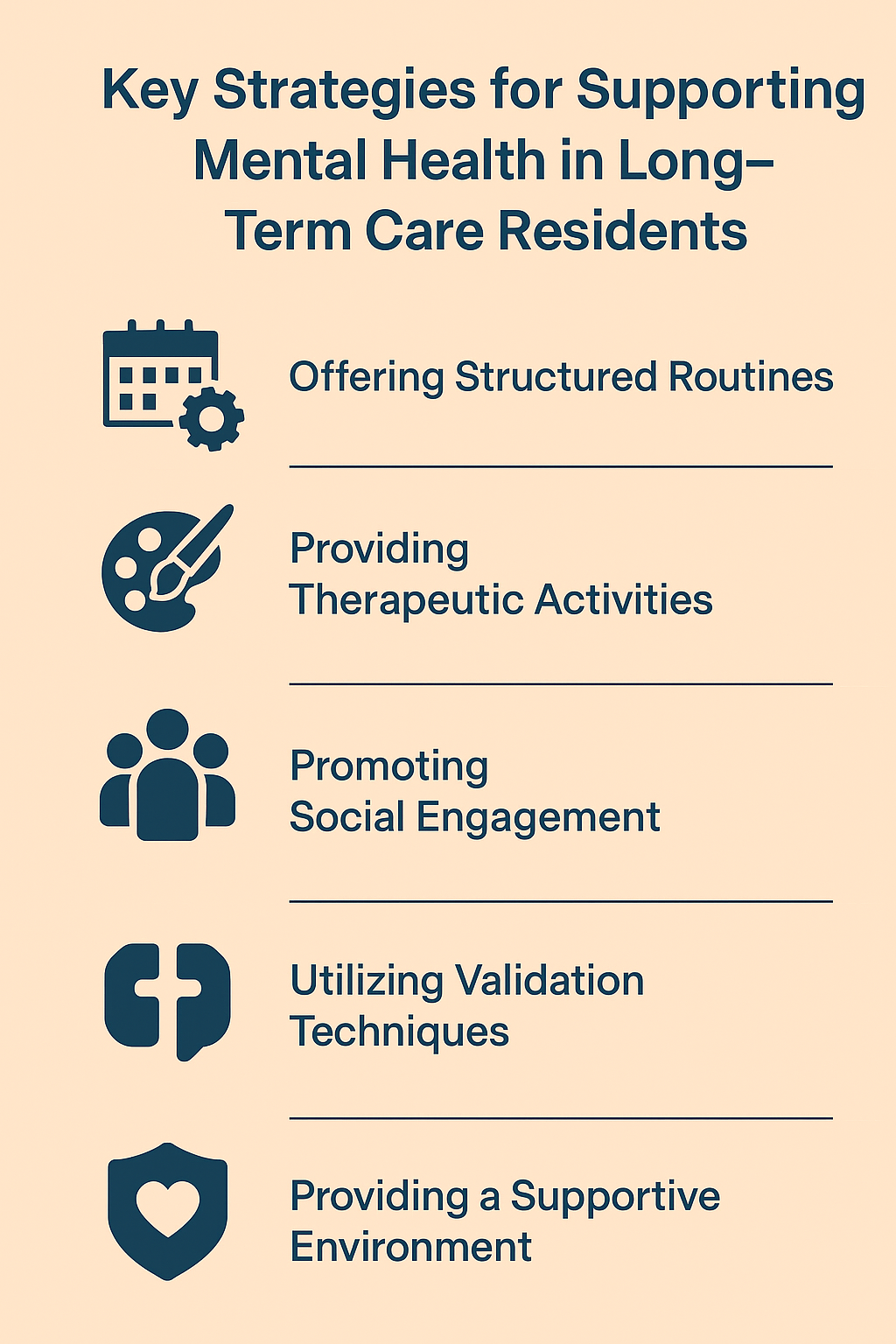
Effective support for mental health in long-term care includes:

  • Promoting resident autonomy and decision-making whenever possible
  • Creating structured routines to provide predictability and security
  • Using validation therapy techniques to affirm resident experiences
  • Providing a safe, supportive, and stigma-free environment
  • Training staff in trauma-informed care and de-escalation techniques
  • Encouraging family involvement and maintaining community connections

Legal and Ethical Considerations

In Kansas, SSDs and ADs must adhere to federal and state regulations, including:

  • Resident Rights under the Kansas Nursing Facility Reform Act and federal OBRA regulations
  • HIPAA laws regarding the confidentiality of mental health records
  • Mandatory reporting laws for suspected abuse, neglect, or exploitation
  • Promoting informed consent and respecting resident choices in care planning

Conclusion

Supporting residents with mental health needs in long-term care requires compassion, knowledge, collaboration, and specialized skills. Social Service Designees and Activities Directors are uniquely positioned to enhance mental health outcomes, improve residents' quality of life, and advocate for person-centered care within Kansas long-term care facilities.

References:

  • Kansas Department for Aging and Disability Services (KDADS). Long Term Care Facility Regulations. Retrieved from https://kdads.ks.gov
  • Centers for Medicare & Medicaid Services. (2023). State Operations Manual - Appendix PP - Guidance to Surveyors for Long Term Care Facilities.
  • National Institute of Mental Health. (2024). Mental Health and Older Adults. Retrieved from https://www.nimh.nih.gov
Download Supplemental Slides